E-mail: info@gem-cablesolution.com
 Address: No.8 Yuefeng Rd, High Tech Zone, Dongtai, Jiangsu, China | No.109 Qilin East Rd, Daning, Humen, Dongguan, Guangdong, China.
 English
  English
 русский
 日本語
日本語 Español
 عربى
عربى 中文简体
中文简体




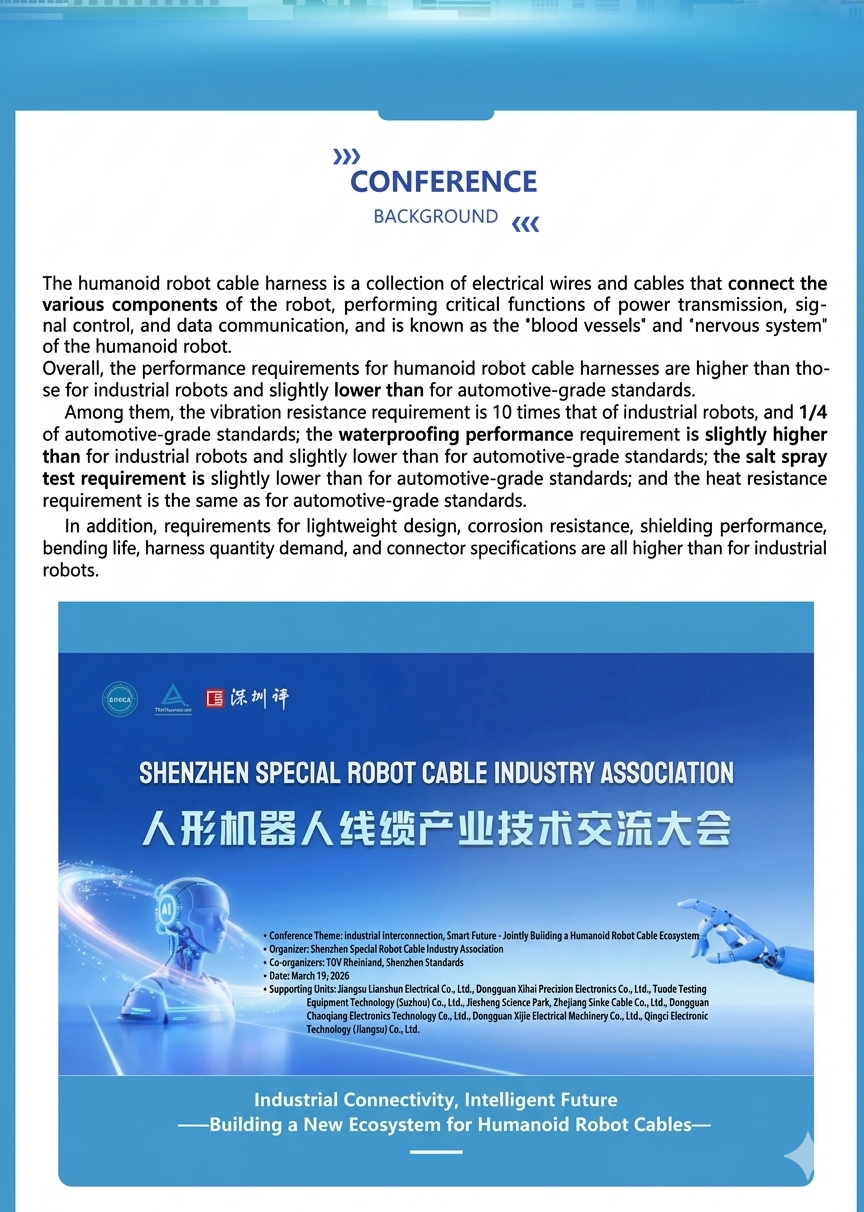
A humanoid robot wiring harness refers to the assembly of wires and cables that interconnect the various components of a robot. By transmitting power, signals, and data, these harnesses enable the robot to function properly. Typically, a humanoid robot wiring harness consists of conductors, insulating materials, protective layers, and connectors. As a critical component linking the robot's various electrical parts, the wiring harness fulfills vital functions—including power transmission, signal control, and data communication—effectively serving as the robot's "blood vessels" and "nervous system."
Based on product type, humanoid robot wiring harnesses can be categorized into flexible cables and rigid cables; based on product function, they can be classified into power harnesses and signal harnesses.
Components of a Wiring Harness
1. Conductors
• Conductors are typically made of copper or aluminum, materials known for their excellent electrical conductivity. The larger the cross-sectional area of a conductor, the greater its capacity for transmitting electrical current.
• Furthermore, the insulating material surrounding the conductors is of paramount importance, as it prevents current leakage and short circuits. Common insulating materials include Polyvinyl Chloride (PVC), Polyethylene (PE), and Thermoplastic Elastomers (TPE).
2. Protective Layers
• These layers serve to shield the conductors from damage caused by external environmental factors, such as mechanical abrasion, chemical corrosion, and high temperatures. Common materials used for protective layers include Polyvinyl Chloride (PVC), Polyurethane (PU), and silicone.
• Different protective layer materials are suited to different operating environments; for instance, in high-temperature settings, a silicone protective layer offers superior heat resistance.
3. Connectors
• Connectors serve to link the wiring harness to the various individual components of the robot. Typically constructed from metal or plastic, they are characterized by their excellent conductivity and durability. Common types of connectors include circular connectors, rectangular connectors, and plug-type connectors.
• Different types of connectors are tailored to specific robotic applications; for example, circular connectors are well-suited for connecting robot joints, while rectangular connectors are typically used for connecting to the robot's control cabinet.




 Related Products