E-mail: info@gem-cablesolution.com
 Address: No.8 Yuefeng Rd, High Tech Zone, Dongtai, Jiangsu, China | No.109 Qilin East Rd, Daning, Humen, Dongguan, Guangdong, China.
 English
  English
 русский
 日本語
日本語 Español
 عربى
عربى 中文简体
中文简体



Content
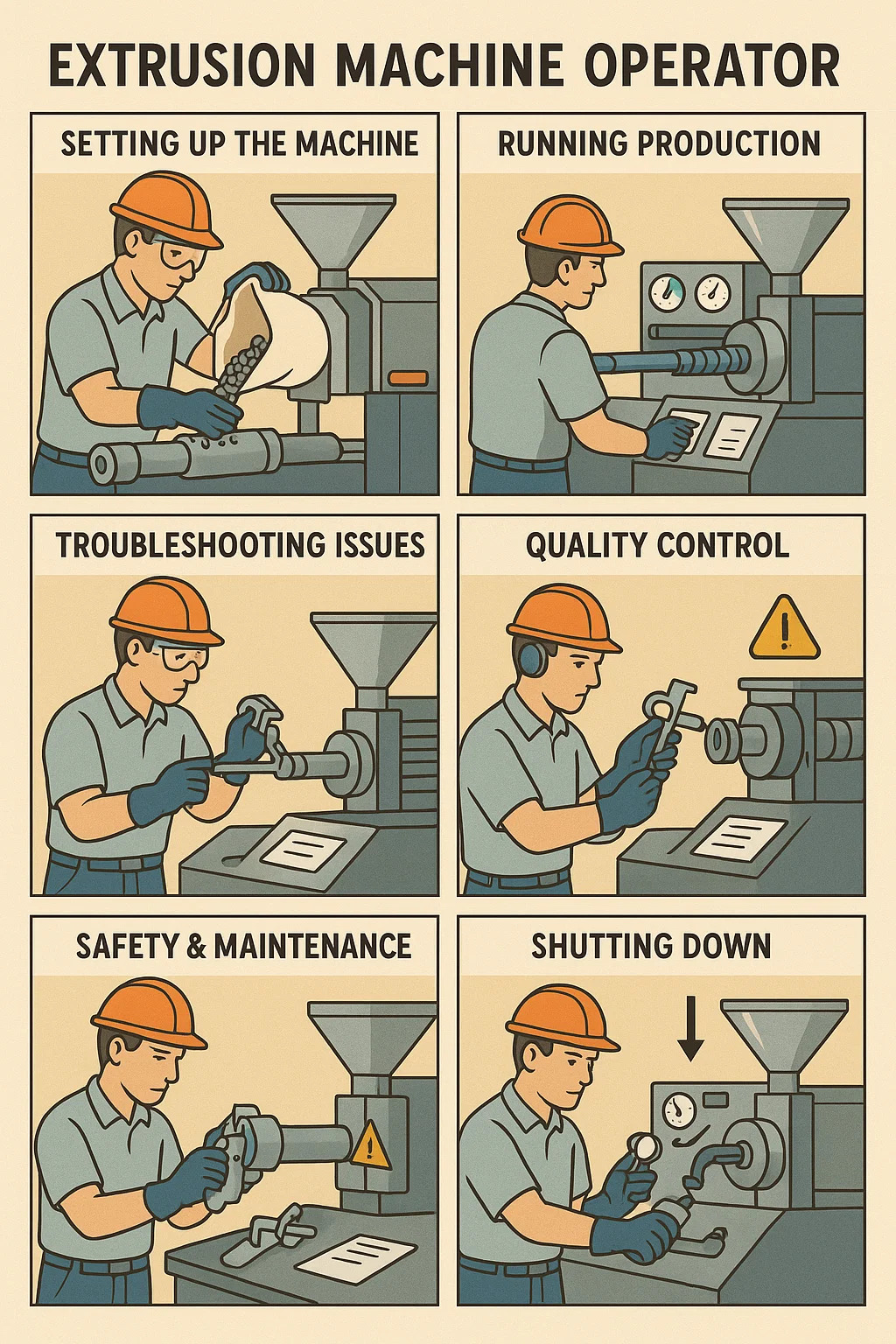
Here's what an extrusion machine operator does daily:
1. Setting Up the Machine
Prepares materials: Loads plastic pellets, rubber, or powders into the hopper.
Installs tools: Swaps out dies or screws to match the product being made (e.g., pipe, wire coating).
Heats the barrel: Adjusts barrel temperatures to melt materials properly.
2. Running Production
Starts the line: Powers up the extruder, conveyor, and cooling systems.
Monitors gauges: Watches temperature, pressure, and speed readouts to catch problems early.
Feeds material: Keeps the hopper filled to avoid interruptions.
3. Troubleshooting Issues
Fixes jams: Clears clogs in the die or screw when material sticks.
Adjusts settings: Tweaks heat, screw speed, or puller tension if the product looks wrong (e.g., bubbly coating, uneven shapes).
Checks quality: Spots flaws like scratches, lumps, or size errors.
4. Quality Control
Measures products: Uses calipers or gauges to check thickness/diameter.
Tests samples: Cuts small pieces to verify strength or flexibility.
Keeps records: Logs production amounts, defects, and machine settings.
5. Safety & Maintenance
Wears gear: Uses gloves, goggles, and ear protection near hot/noisy machines.
Cleans regularly: Wipes down screws, dies, and hoppers to prevent contamination.
Lubricates parts: Oils moving components to reduce wear.
6. Shutting Down
Cools the machine: Gradually lowers temperatures before stopping.
Purges residue: Runs cleaning pellets through to flush out leftover material.
Inspects equipment: Looks for worn screws, leaks, or electrical issues.
 Related Products