E-mail: info@gem-cablesolution.com
 Address: No.8 Yuefeng Rd, High Tech Zone, Dongtai, Jiangsu, China | No.109 Qilin East Rd, Daning, Humen, Dongguan, Guangdong, China.
 English
  English
 русский
 日本語
日本語 Español
 عربى
عربى 中文简体
中文简体



Content
- 1 What Bunch Stranding Means
- 2 Key Technical Properties of Bunched Conductors
- 3 Bunch Stranding vs. Other Stranding Methods
- 4 Bunch Stranding Classes and Standards
- 5 Industrial Applications of Bunch Stranding
- 6 Manufacturing Considerations for Bunch Stranding
- 7 Purchasing Guide: What to Look For in a Bunch Stranding Line
- 8 Frequently Asked Questions About Bunch Stranding
- 8.1 What is the difference between bunch stranding and concentric stranding?
- 8.2 Where is bunch stranding most commonly used?
- 8.3 What are the stranding classes for bunched conductors?
- 8.4 Does bunch stranding affect electrical performance?
- 8.5 What equipment is needed for bunch stranding?
- 8.6 How do you control tension during bunch stranding?
- 8.7 Is bunch stranding suitable for high-frequency cables?
What Bunch Stranding Means
Bunch stranding is a conductor construction method where two or more bare wires are twisted together in a single operation, all in the same direction, without maintaining a fixed geometric pattern. The result is a flexible, round conductor that is economical to produce and suitable for many signal and flexible cord applications. Compared with concentric stranding, bunched conductors have a lower fill factor but a simpler, faster manufacturing process.
When you are selecting a cable construction, the term bunch stranding appears in standards such as ASTM B8 and in everyday shop language. It tells you that the conductor is not built in ordered layers. Instead, the strands are bundled together in what looks like a loose but deliberate twist. The lay direction must be consistent, but the positions of individual strands are random.
Key Technical Properties of Bunched Conductors
A bunch stranded conductor is defined by three measurable properties: lay direction, lay length, and strand count. These properties directly influence the flexibility, fill factor, and electrical behavior of the finished wire.
- Lay direction - All strands must twist in the same direction, either S (right-hand) or Z (left-hand). A mixed lay direction will kink the conductor and raise its DC resistance.
- Lay length - Measured as the distance for one complete revolution. A shorter lay length increases flexibility and stiffness. A longer lay length increases fill factor.
- Fill factor - The ratio of metal area to the total conductor area. A bunched conductor typically has a fill factor of 80 to 85 percent, while concentric stranding can reach 90 to 95 percent.
In practical terms, the lower fill factor is not a defect. Cable designers intentionally use bunch stranding for applications that need flexibility. For example, in a 7-strand bunched conductor with 0.2 mm wires, the cross-sectional area remains the same as a concentric construction, but the outer surface is irregular. This irregular surface helps the conductor bend without fatigue.
Bunch Stranding vs. Other Stranding Methods
Cable engineers choose between three main stranding constructions. Understanding the difference helps you specify the right conductor and avoid costly performance mismatches.
| Property | Bunch Stranding | Concentric Stranding | Rope-Lay |
|---|---|---|---|
| Strand arrangement | Random | Ordered layers | Multiple sub-bundles |
| Fill factor | 80-85% | 90-95% | 85-90% |
| Flexibility | High | Moderate | High |
| Production speed | Fast | Slower | Slow |
| Typical applications | Litz wire, signal cables, flexible cords | Power cables, building wire | Large shipboard and trailing cables |
A common mistake is to assume that bunched conductors are unsuitable for power transmission. In reality, many portable cords and welding cables use bunch stranding because the extra flexibility outweighs the slightly reduced fill factor.
Bunch Stranding Classes and Standards
The stranding class system in standards like ASTM B8 and B174 defines which construction a conductor must have for a given application.
Class I, K, and M are bunch stranded
- Class I - Commonly used for building wire and small power cables. Strands are typically 0.32 mm to 0.4 mm.
- Class K - Designed for portable cords and flexible cables. Strand diameter is usually 0.3 mm or finer.
- Class M - Uses very fine strands, typically 0.1 mm or less, for extreme flexibility in welding cables and audio cables.
Class G and H are concentric-lay or rope-lay constructions, not bunch stranded. When a drawing specifies Class K or M, the conductor must be produced with bunched stranding. This matters for your quoting process because the machine used to twist the wire must handle the specific strand count and diameter specified by the class.
Industrial Applications of Bunch Stranding
Bunch stranding is not a niche construction. It is used across many cable product families, each requiring specific twisting equipment and process control.
Network and LAN Cables
In Category 5e, 6, and 6A network cables, the twisted pairs are usually bunched stranded to achieve the required flexibility and crush resistance. The conductor is often 24 AWG or 23 AWG with 7 or 19 strands. A dedicated network cable twisting machine is used to control the lay length and ensure consistency across the entire cable length.
 Integrated Back Twist Pair Twisting Machine for Network CableThis machine ensures precise pitch and tight pairing for network cables. Its independent capstan and synchronous motors allow digital pitch control, reducing internal stress to produce straight, gap-free pairs with stable electrical performance.View Product →
Automotive Data Cables
Modern vehicles rely on data cables for cameras, radar, and infotainment systems. These cables require tight tolerance on impedance and crosstalk. Automotive data cable twisting uses a torsion-free twisting machine that avoids extra rotation in the conductor. This is especially important because a bunched conductor is more sensitive to torsional stress than a concentric one.
Back Twist Pair Twisting Machine for Automotive Data CableDesigned for automotive data cables, this unit integrates back twist pay-off, ground wire filling, and tape wrapping. It achieves precise single twisting with adjustable back-twist rate, enabling high-quality shielding and signal transmission.View Product →
Litz Wire, High-Frequency and Mica Wires
Litz wire uses many fine strands in a bunched arrangement to reduce skin effect at radio frequency. The bundling process is often followed by a taping stage. A high-frequency wire taping machine with hysteresis tension control is used to wrap the bunched conductor with insulation. The same machine can be configured for mica tape, which is common in fire-resistant cables.
Hysteresis Tension Taping Machine for High Frequency WireHigh-frequency cables require stable impedance and low attenuation. This taping machine with hysteresis tension control precisely wraps aluminum foil and Mylar tape, ensuring consistent cable structure and reliable signal transmission for HDMI, USB, and DVI applications.View Product →Manufacturing Considerations for Bunch Stranding
Running a bunch stranding line requires three critical checks before you start. Missing any of them results in poor conductor quality, high scrap rates, and delayed delivery.
- Strand tension - Every payoff must unwind with the same tension. If one strand is too loose, it will form a loop inside the bundle and cause a kink. Tension control is usually achieved with a magnetic powder brake or a servo-controlled dancer.
- Lay length consistency - The twisting speed must synchronize with the take-up speed. On a high-performance twisting line, the technical characteristics of high-speed stranding machines show that electronic lay control is the preferred method.
- Online fault detection - A broken strand remains inside the bundle and is difficult to see after the taping operation. You need a detector that stops the line immediately when a single strand breaks.
Common Defect to Watch: Overtape
When the taping head applies more than one layer of tape, the bunched conductor becomes stiffer. This changes the bend radius and contributes to signal loss in high-frequency cables. A wire taping machine with dual-axis tension sensing helps prevent overtape and maintains a tight, even wrap.
Purchasing Guide: What to Look For in a Bunch Stranding Line
If you are evaluating a new bunched stranding machine, focus on these four areas instead of only comparing maximum speed.
Strand diameter range - Confirm the machine can process the smallest strand you plan to use. A Class M conductor with 0.06 mm strands requires much finer payoff tension control than a Class I conductor with 0.4 mm strands.
Lay length range - Look at the minimum and maximum lay length. If you produce both signal cables and power cords, you need a range that covers from 5 mm to 60 mm.
Tape or wrap capability - Many customers want a single line that twists and wraps. This reduces handling and saves floor space. Consider a machine that supports both a bunch stranding stage and a taping stage, controlled by one PLC.
After-sales support - Ask the supplier about spare part availability and remote diagnostics. For a global cable producer, this matters more than the initial price.
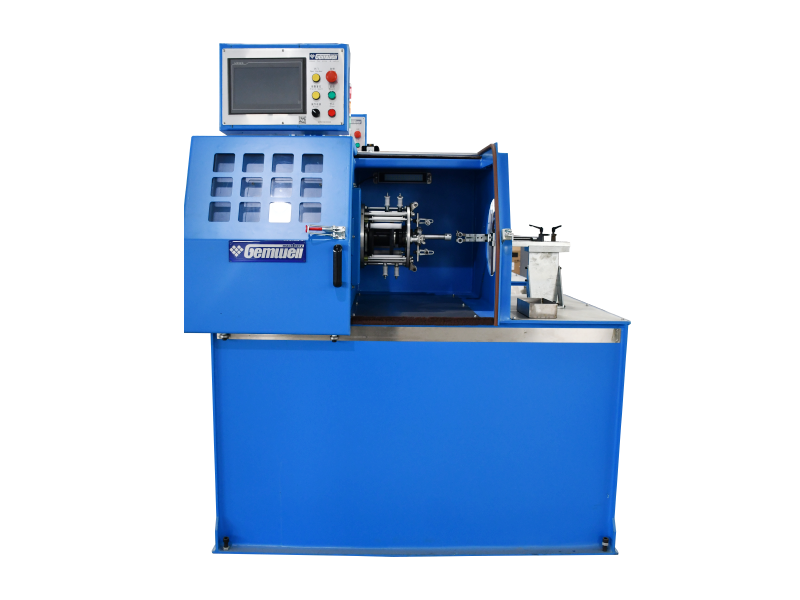
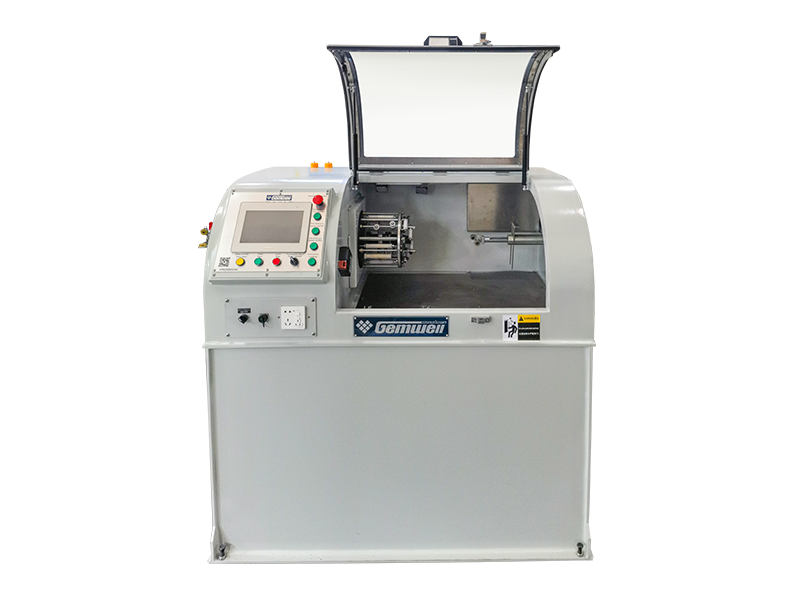
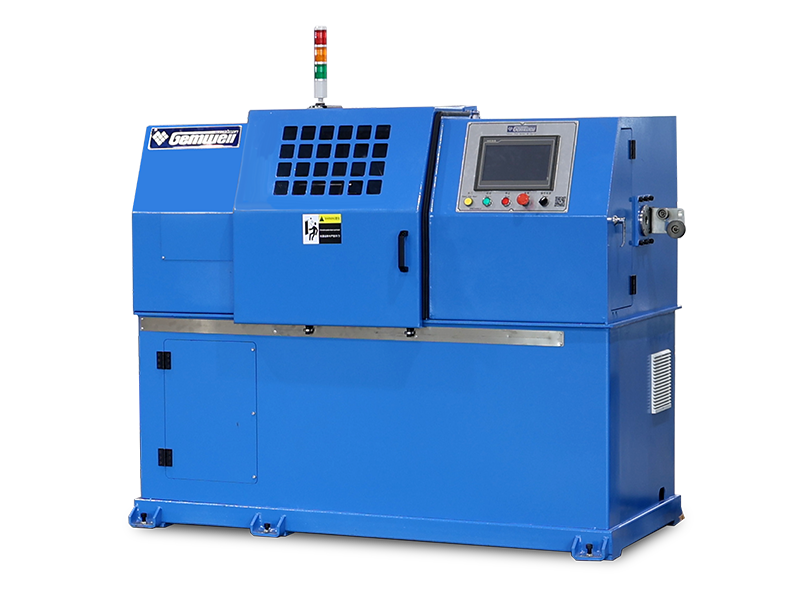
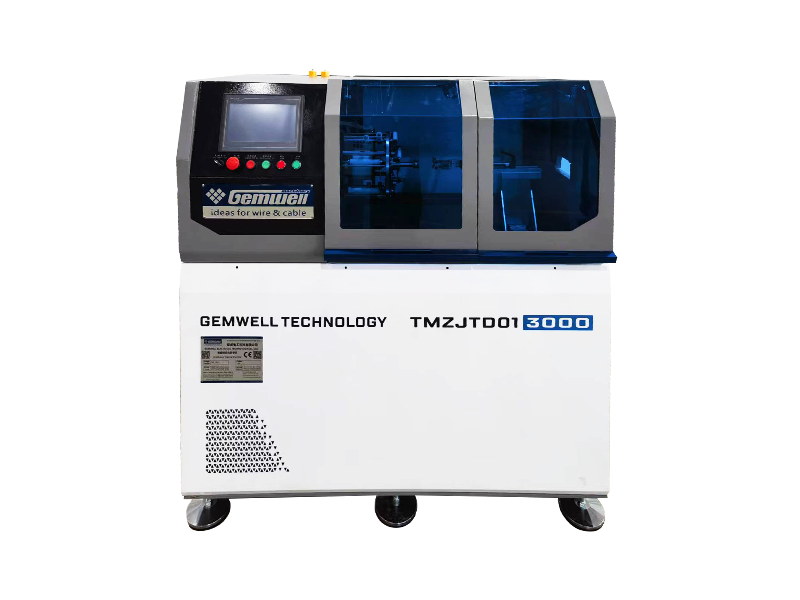
At Gemwell, we design and manufacture bunched stranding and taping machines for export to more than 40 countries. Our engineering team can tailor a line to your specific conductor construction, from ultrafine Litz wire to heavy-duty Class K portable cords.
Frequently Asked Questions About Bunch Stranding
What is the difference between bunch stranding and concentric stranding?
Bunch stranding twists all strands together in one operation with no fixed geometric pattern. Concentric stranding places wires in ordered layers around a central wire. Bunch stranding is faster and more flexible; concentric stranding has a higher fill factor and lower DC resistance for the same outer diameter.
Where is bunch stranding most commonly used?
Bunch stranding is used in Litz wire, audio cables, portable cords, welding cables, network twisted pairs, and automotive data cables. It is the preferred choice when flexibility and ease of termination matter more than maximum fill factor.
What are the stranding classes for bunched conductors?
Class I, Class K, and Class M are bunch stranded. Class I suits building wire, Class K suits portable cords, and Class M uses very fine strands for extreme flexibility.
Does bunch stranding affect electrical performance?
DC resistance is not affected if the total cross-sectional area is correct. AC resistance at high frequencies may increase due to skin and proximity effects. That is why Litz wire uses many fine bunched strands.
What equipment is needed for bunch stranding?
You need a bunch stranding machine with multiple payoffs, a twisting head, and a take-up unit. If the conductor is taped after twisting, a taping head is also required. Both stages should run from one control system.
How do you control tension during bunch stranding?
Use a magnetic powder brake, servo-driven tensioner, or hysteresis device on each payoff. The tension should be adjusted according to strand diameter. Finer strands need lower tension to avoid breakage.
Is bunch stranding suitable for high-frequency cables?
Yes, especially in the form of Litz wire. In high-frequency applications, bunched conductors made from many fine strands reduce current crowding. Still, the lay length must be controlled carefully to keep impedance stable.
 Related Products