E-mail: info@gem-cablesolution.com
 Address: No.8 Yuefeng Rd, High Tech Zone, Dongtai, Jiangsu, China | No.109 Qilin East Rd, Daning, Humen, Dongguan, Guangdong, China.
 English
 English
 русский
 日本語
 Español
 عربى
 中文简体

 Product Category




Establishment time

Building area (m²)

Number of employees

Intellectual property
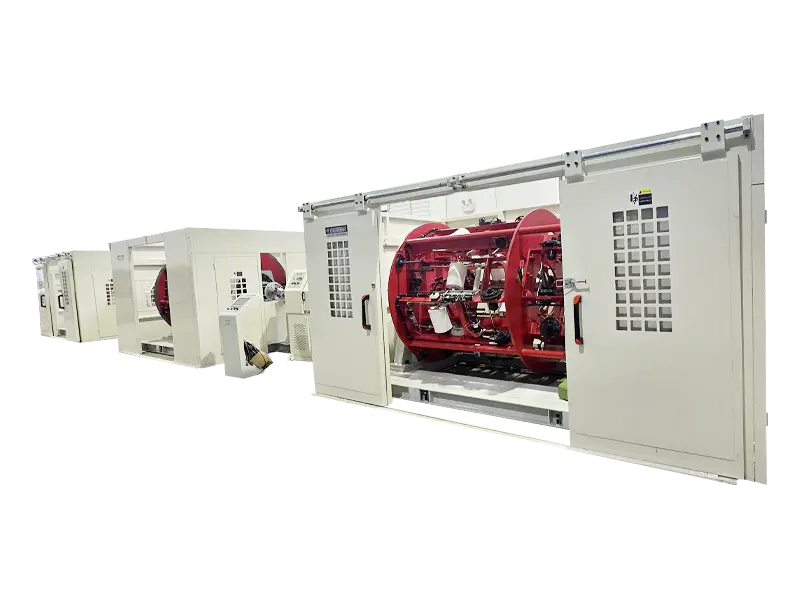
A Mature Factory You Can Count On
 2026-11-02
 Webmaster
If you strip the outer jacket off a Cat 6 network cable, a USB data line, or a low-voltage control cable, the colored insulation on each copper condu
Read More +
2026-10-26
Webmaster
XLPE insulation exists for one reason: ordinary polyethylene cannot hold up when a cable gets hot. Cross-linking rewires the polymer structure so the
Read More +
2026-10-19
Webmaster
At the back of every router there is at least one port shaped like a wide telephone socket, and the cable that fits into it is an Ethernet cable. In
Read More +
2026-10-12
Webmaster
The Direct Answer: What You Should Expect From a Copper Wire Stranding Cross Section Machine A copper wire stranding cross section machine is judged
Read More +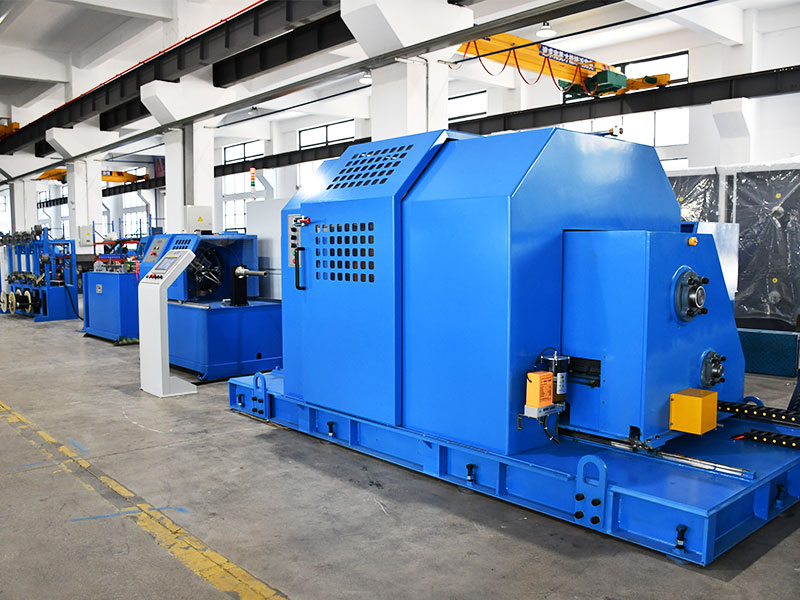
2026-10-05
Webmaster
What Is a Precision Wire Extrusion Machine? A precision wire extrusion machine is a production line that melts polymer resin, feeds it through a prec
Read More +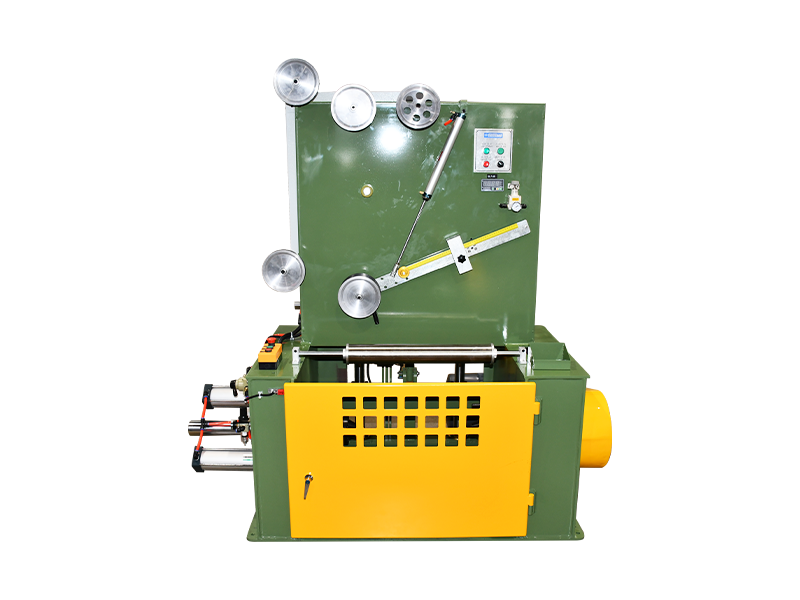
Cage twisting machine equipment does one job in a cable plant: it takes single wires from rotating bobbins and lays them around a common axis into a round, stable strand. That strand becomes the conductor or core bundle that later goes through insulation, taping and sheathing, so any fault made here travels with the cable through every later step. This article looks at how the stranding process works, how to calculate lay length and die size, how a rotating cage differs from a planetary layout, and what buyers should confirm before ordering. It draws on the experience of Gemwell Electrical Technology Co., Ltd, a wire and cable equipment provider founded in 2005 that designs, manufactures and sells machines to more than 40 countries.
Gemwell Electrical Technology Co., Ltd lists quality stability and precision manufacturing among its core commitments, and on a stranding line those two ideas come down to plain things: even tension on every wire, a steady rotation, and a closing die that stays true. Before getting to any numbers, it helps to see where each of those lives on the machine.
The wire path is short. Single wires leave their bobbins in the rotating cage, meet at the closing die, get pulled through by the haul-off and are wound onto the take-up. Each stage has one job, and each shows up directly in the finished strand:
Wire count in a concentric strand also follows a fixed pattern, which helps when you plan bobbin positions for each layer. A center wire is surrounded by 6 wires in the first layer, 12 in the second and 18 in the third, so the total climbs fast: 7 wires with one layer, 37 with three layers, 91 with five.
Chart 1: Total wires in a concentric strand by number of layers around the center wire, calculated from the geometry of round wires in contact.
On a rotating cage layout, one full turn of the cage lays the wires once around the strand axis. That makes the setting easy to calculate, since lay length equals line speed divided by cage speed.
Lay length (mm) = line speed (mm per minute) divided by cage speed (rpm)
Take a line running at 20 m/min, which is 20,000 mm/min. At 200 rpm the lay length is 100 mm. To cut it to 50 mm you can raise the cage to 400 rpm at the same line speed, or hold 200 rpm and slow the line to 10 m/min. Chart 2 shows how quickly the lay shortens as the cage speeds up.
Chart 2: Lay length at a fixed line speed of 20 m/min for different cage speeds, calculated with the formula above.
Because lay length ties straight back to line speed and cage speed, it is the first thing to agree on when you specify a line with the design team at Gemwell Electrical Technology Co., Ltd, whose technical staff from design through production have 26 years of experience in wire and cable machinery.
The closing die has to match the strand diameter, and a first estimate is simple. For round wires laid in contact, the outer diameter equals (2n + 1) times the single wire diameter, where n is the number of layers around the center wire. With 0.5 mm wires and 3 layers, that gives 7 times 0.5 mm, or 3.5 mm. Real strands land slightly differently once tension and lay length come into play, so treat the figure as the starting point for the die trial, not the final size.
Chart 3: Ideal strand outer diameter as a multiple of single wire diameter (d) for 1 to 5 layers, calculated for round wires in contact before compaction.
The main difference is what happens to each wire as the strand forms. In a rotating cage layout the bobbins ride inside the cage and turn with it, so every wire picks up one turn of torsion per lay. Many conductors handle that without trouble, and the machine stays mechanically simple and can run fast. A planetary layout holds each bobbin in a cradle that keeps its orientation, so the wire is laid without picking up that torsion. Delicate or torsion-sensitive wires often need the gentler path.
Chart 4: Relative comparison of the two layouts on a 1 to 5 scale. This is an illustrative guide based on general machine construction, not measured test data.
Cage twisting machine options in our range include an AI high speed, active payoff type planetary stranding line, which covers the planetary route for buyers who need it.
Beyond the layout itself, we aim to stay close to global high-end information transmission cable and wire manufacturers, with continuous innovation at the core of how we grow. We see mastery of extrusion, twisting, wrapping and cabling processes as the base, and digital intelligence tools for measurement, communication, adjustment and automation on the line as the way to go further. The goal is to help customers do more with less: better use of line capacity, steady product quality, and support when they develop new product designs or process new materials.
That approach applies to every stranding line built at Gemwell Electrical Technology Co., Ltd, whichever layout it uses.
Gemwell Electrical Technology Co., Ltd puts every machine through a rigorous testing and calibration process that takes a full week before shipment, so stability and performance are checked before the machine reaches your floor.
Support does not stop at the factory door. We commit to a 24-hour response to any issue a customer meets while using our machines, and every machine carries a one-year quality guarantee with lifelong service support behind it. On a stranding line, a small drift in tension or speed can show up in the strand long before it stops production, so a quick answer from the maker counts.
Whichever supplier you talk to, a clear brief speeds up the quote and avoids rework. Table 1 lists what to have ready.
| Item | What to tell the supplier | Why it matters |
|---|---|---|
| Wire material and diameter | Copper or aluminum, and the single wire diameter | Sets bobbin size, tension range and closing die size |
| Wire count and layers | How many wires go into each layer | Fixes how many bobbin positions the cage needs |
| Lay length range | The shortest and longest lay you plan to run | Defines the cage speed and line speed window |
| Torsion sensitivity | Whether the wires can take one turn of twist per lay | Decides between a rotating cage and a planetary layout |
| Downstream process | What follows the strand: insulation, taping or sheathing | Sets take-up type and how the line speeds match |
We have been designing, manufacturing and selling wire and cable equipment since 2005, for customers in the United States, Canada, Mexico, Germany, Italy, India, Thailand and more than 40 countries in total. We also welcome agents who want to set up a company and sell our machines on our behalf, for mutual benefit.
It strands several single wires into one round conductor or core bundle. The strand then moves on to insulation, taping or sheathing, depending on the cable being made.
Start with torsion. If the wires can take one turn of twist per lay, a rotating cage is simpler and can run fast. If they are delicate or torsion-sensitive, look at a planetary layout.
Change the ratio between line speed and cage speed. At 20 m/min, moving from 200 rpm to 400 rpm halves the lay length from 100 mm to 50 mm.
Wire material and diameter, the number of wires and layers, the lay length range, torsion sensitivity, and what follows the strand in your line. Table 1 above covers each item.
Gemwell Electrical Technology Co., Ltd commits to a 24-hour response time for issues customers meet while using its machines. A one-year quality guarantee applies, and lifelong service support stands behind each machine.
Yes. We welcome agents who set up companies to sell our machines on our behalf, for mutual benefit. Get in touch and tell us which region you cover.

 Custom Cage twisting machine Manufacturers