E-mail: info@gem-cablesolution.com
 Address: No.8 Yuefeng Rd, High Tech Zone, Dongtai, Jiangsu, China | No.109 Qilin East Rd, Daning, Humen, Dongguan, Guangdong, China.
 English
  English
 русский
 日本語
日本語 Español
 عربى
عربى 中文简体
中文简体



Content
- 1 The Direct Answer: What You Should Expect From a Copper Wire Stranding Cross Section Machine
- 2 How Cross Section Geometry Is Built During Stranding
- 3 Machine Families Compared: Which Type Delivers the Tightest Cross Section
- 4 The Role of a Wire Pair Twisting Machine in Multi-Pair Cable Geometry
- 5 Process Factors That Change the Cross Section Every Day
- 6 In-Line Quality Checks and Cross Section Defects
- 7 Automation, PLC Control, and Data Logging on Modern Lines
- 8 How to Choose a Configuration for Your Production Line
- 9 Maintenance Habits That Keep Cross Section Accuracy Stable
- 10 Frequently Asked Questions
- 10.1 What cross section tolerance should a copper stranding machine hold?
- 10.2 Is a wire pair twisting machine the same as a strand bunching machine?
- 10.3 Why does compaction change the outer diameter of a stranded conductor?
- 10.4 What causes an oval instead of round cross section after stranding?
- 10.5 How often should forming dies be replaced on a stranding line?
- 10.6 Why does twist pitch differ between pairs inside the same multi-pair cable?
The Direct Answer: What You Should Expect From a Copper Wire Stranding Cross Section Machine
A copper wire stranding cross section machine is judged first by dimensional repeatability, not by top speed. If the machine cannot reproduce the same cross section geometry on reel after reel, any increase in output speed becomes a liability. The tolerance stack-up in a stranded conductor is small: a change of 0.1 mm in the outer diameter can shift the cross sectional area by roughly 1.5% for a 1.5 mm² conductor, which in turn changes the DC resistance and the current carrying capacity.
In practice, you should expect a well-tuned stranding machine to hold the outer diameter within ±0.05 mm for most building wire and automotive cable applications. That is the baseline. The machine also has to maintain a stable lay length, because lay length affects the helix angle and the mechanical flexibility of the finished conductor. When you evaluate a machine, ask for evidence of repeatability at different speeds, not just at one set point.
This guide breaks down the factors that control cross section accuracy, compares the main machine types, and shows you what to look for in a production line. The goal is to help you avoid the two costly mistakes: buying a machine that cannot hold tolerance, and buying a machine that is over-specified for the products you actually run.
How Cross Section Geometry Is Built During Stranding
Stranding takes multiple single copper wires and lays them in a helical pattern around a central axis. The resulting bundle has a cross section that is not a perfect circle. The arrangement of the wires, the number of layers, and the compaction level determine the actual cross sectional area and the outer envelope of the conductor.
Three geometric terms matter more than any others:
- Lay length is the axial distance for one complete helical wrap of a wire around the core. A shorter lay length increases the helix angle and makes the conductor more flexible but also increases the friction and the risk of surface damage.
- Layer pattern describes how many wires are in each layer. For a concentric construction, the number of wires in a single layer is usually the sum of all previous layer wires plus the core wire. For example, a 7-wire conductor has 1 core wire and 6 in the first layer.
- Compaction is a reduction of the outer diameter by passing the stranded bundle through a forming die. Compaction increases the copper fill factor but makes the conductor stiffer.
The fill factor is a quick way to compare constructions. A non-compacted 7-wire conductor has a fill factor around 0.78, while a compacted version can reach 0.92 or higher. The trade-off is that compaction increases the residual stress in the copper and often requires a follow-up annealing step.
Machine Families Compared: Which Type Delivers the Tightest Cross Section
The machine family you choose has a direct effect on the cross section you can achieve. Each type has a different tension profile, rotation mechanism, and speed range. The table below gives a quick comparison for the four main families used in copper stranding.
| Machine type | Typical speed range | Cross section control | Best fit application |
|---|---|---|---|
| Bunching machine | 5000–8000 rpm | Good for fine wires, but diameter can vary with tension. | UL wire, fine flexible cords |
| Rigid frame stranding | 200–600 rpm | Excellent dimensional stability, but slow. | Large power cables |
| Tubular stranding | 1500–4000 rpm | Moderate control, good for medium wire sizes. | Flexible cords, control cables |
| Planetary stranding | 100–500 rpm | Very precise, especially for special cables. | Aerospace, high-end data cables |
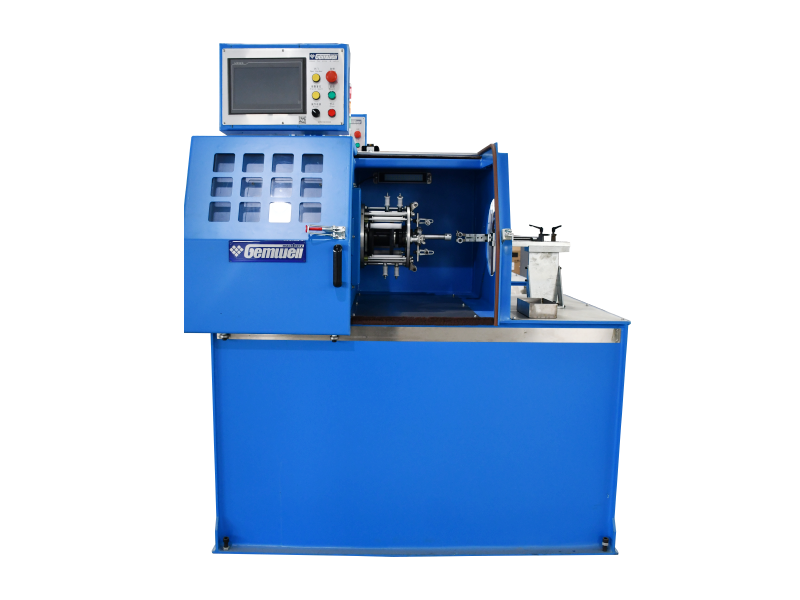
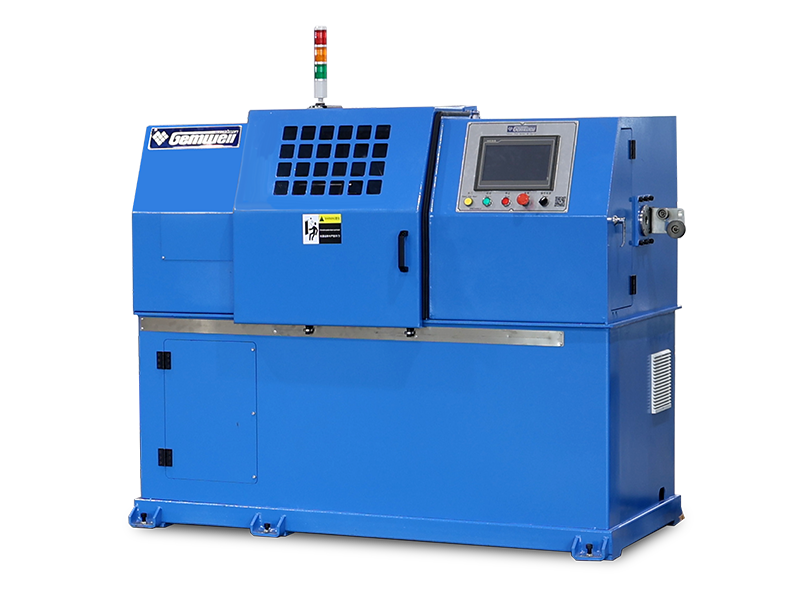
For medium-sized copper conductors and general cable manufacturing, the cantilever single twisting family offers a practical middle ground. These machines maintain a stable tension path through the entire twisting cycle, which is the key to holding a repeatable cross section. One example is a differential-speed takeup type cantilever single twisting machine without takeup pulley, designed to eliminate the diameter variation caused by tension shifts on the takeup side.
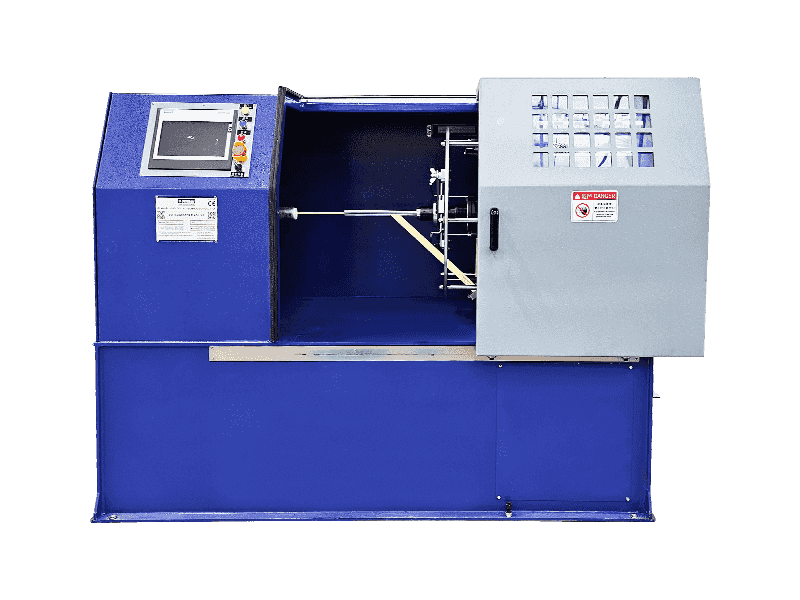
 Differential-Speed Take-Up Cantilever Single Twisting Machine Without Capstan PulleyThis machine maintains stable tension through a differential transmission, eliminating takeup-side tension shifts. It's ideal for medium-sized copper conductors where repeatable cross-section geometry is critical.View Product →
The Role of a Wire Pair Twisting Machine in Multi-Pair Cable Geometry
A copper wire stranding cross section machine is often confused with a wire pair twisting machine. They are not the same. The stranding machine makes the single conductor from many wires. A wire pair twisting machine takes two already-stranded conductors and twists them into a pair while maintaining a tight and uniform geometry.
When you are building network cables or industrial Ethernet cables, the cross section of the pair matters for impedance and return loss. The pair twist length and the degree of tension on each conductor directly affect the distance between the two conductors, which in turn changes the capacitance and the impedance of the cable. A small drift in the pair cross section can push the cable out of the specified range.
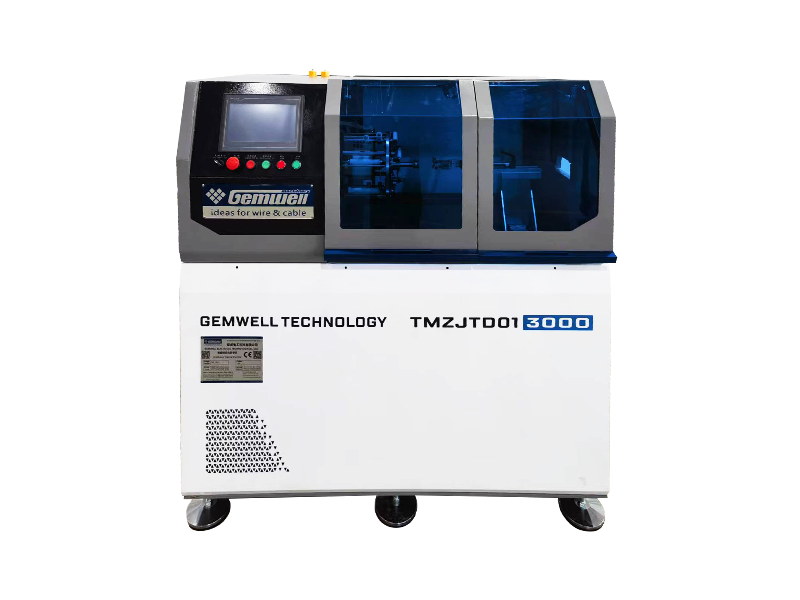
In an Ethernet cable line where the pair twisting step must handle four pairs at once with a consistent pitch, the network cable three-pitch integrated triple twisting machine is a solution that consolidates multiple twisting operations in one machine. It is not the same as a copper stranding machine, but it shares the same demand for precise cross section geometry across the whole multi-pair construction.
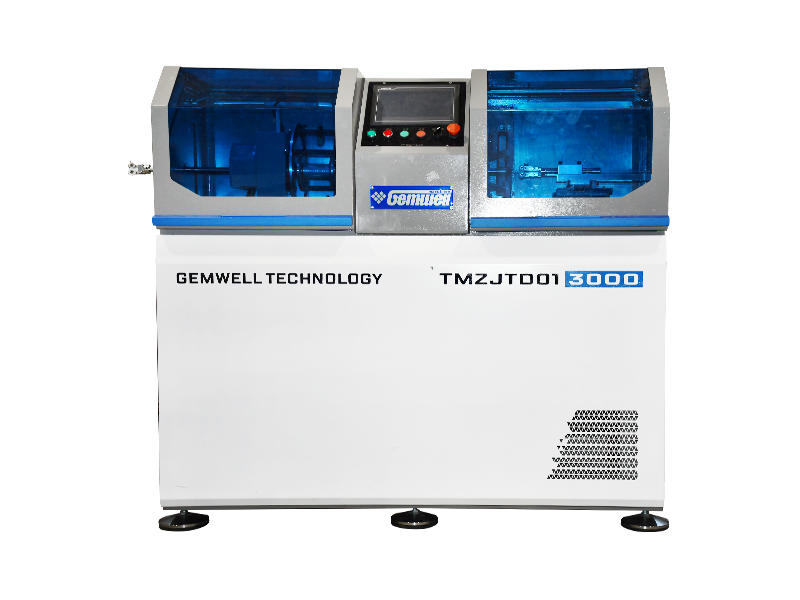
Integrated Three-Pitch Triple Twisting Machine for Network CablesThis machine consolidates single, back, and pair twisting in one unit, ensuring precise pitch consistency for multi-pair cables. It is suitable for CAT5/CAT5E/CAT6 network core wire processing.View Product →Process Factors That Change the Cross Section Every Day
The machine itself is only half the story. The copper wire entering the strander has to be consistent in its diameter, mechanical hardness, and surface condition. The most overlooked factors in everyday production are:
- Copper grade — Oxygen-free copper and ETP (electrolytic tough pitch) copper have different mechanical properties. A change in copper source can alter how the wires compress during stranding and change the final outer diameter by 0.02–0.05 mm.
- Drawing and annealing — Wires must be annealed to a consistent elongation. If the copper is partially work-hardened from the drawing stage, it will not flow uniformly into the stranded bundle, and the cross section will develop an oval shape.
- Tension control — The tension on each individual wire has to be balanced. Unequal tension in a 7-wire construction can make the outer wires ride higher than the others, producing an elliptical cross section.
- Forming die condition — A worn die will produce a non-concentric compacted conductor. Over time, the die diameter grows, and the compaction ratio drops. A die should be measured every 500 running hours and replaced when the diameter increases by more than 0.01 mm.
A practical example from a cable plant making 0.75 mm² flexible conductor: when the forming die was worn by 0.02 mm, the measured cross sectional area dropped by about 2.3%, and the DC resistance increased by 2%. That alone is enough to fail a cosmetically acceptable cable.
In-Line Quality Checks and Cross Section Defects
You cannot inspect your way to a good cross section. You have to build it and monitor it in real time. Modern lines use laser diameter gauges, capacitance measuring equipment, and high-speed cameras. The table below lists the most common defects, their root causes, and the corrective actions operators should take.
| Defect | Root cause | Corrective action |
|---|---|---|
| Oval cross section | Uneven wire tension or worn forming die | Calibrate tension on each wire path; measure and replace die |
| Looseness in outer layer | Insufficient back tension on outer wires | Increase tension in the outer wire payoff reels |
| Diameter drift over a reel | Changing tension as the payoff reel diameter decreases | Use a tension-compensating payoff system |
| Surface scratches | Rough contact surfaces on the bow or guide pulley | Polish or replace contact surfaces; inspect bearing condition |
Automation, PLC Control, and Data Logging on Modern Lines
Modern copper wire stranding cross section machines should not be closed-loop boxes. A good line gives the operator live visibility of the critical parameters that affect cross section: tension per wire, actual lay length, forming die pressure, and line speed. A PLC with a clear HMI lets you store recipes for each product and recall them in seconds.
Data logging is not just for troubleshooting. It is a management tool. If the machine logs the cross section measurement for every 10 meters of wire, you can track trends and predict when a die is about to drift. This proactive approach prevents a large batch of cable from being wasted.
In a system that combines multiple twisting steps, like the network cable three-pitch integrated triple twisting machine, automation becomes the only practical way to keep all sections synchronized. Without automatic tension compensation, a change in one section pulls the whole cable off target.
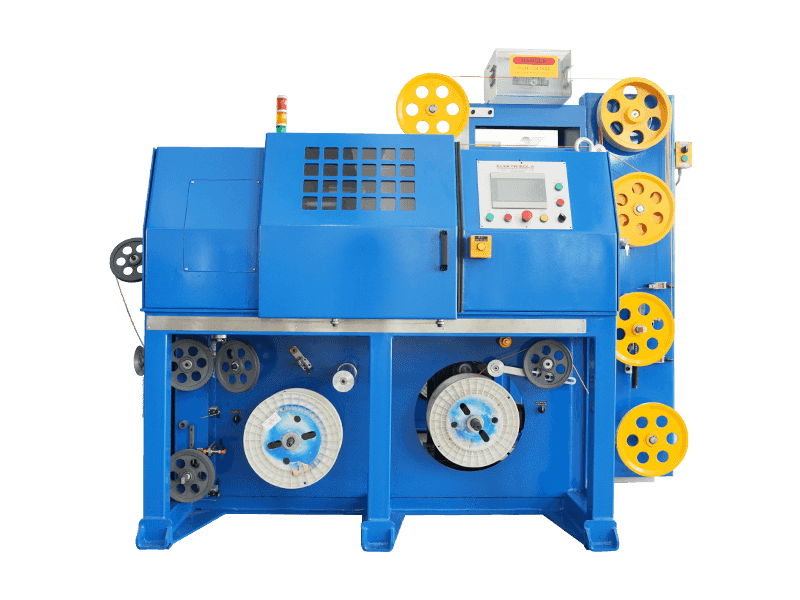
Integrated Three-Pitch Triple Twisting Machine for Network CablesThis machine consolidates single, back, and pair twisting in one unit, ensuring precise pitch consistency for multi-pair cables. It is suitable for CAT5/CAT5E/CAT6 network core wire processing.View Product →How to Choose a Configuration for Your Production Line
Selecting a copper wire stranding cross section machine is a decision that should be based on the products you run now and the products you plan to run in the next three years. The following checklist summarizes the key questions to ask before you buy.
- What is the smallest and largest conductor size you need to strand? The range of wire diameters that the machine can handle determines whether you need a bunching machine, a rigid frame strander, or a cantilever single twisting machine.
- What is the worst-case lay length tolerance your customers expect? For automotive cables, a tolerance of ±5% on lay length is common. For data cables, the tolerance can be even tighter.
- Do you need compaction in the same line, or is compaction a separate step? If you plan to compact, the machine has to be able to accommodate a forming die and maintain the associated back tension.
- What is your expected changeover frequency? If you run many different conductor sizes, a machine with a quick-change die head and adjustable lay length system will save hours every shift.
- What level of after-sales support is available locally? A machine that is hard to service is a recurring cost. Ask for spare-part availability and documented maintenance procedures.
Maintenance Habits That Keep Cross Section Accuracy Stable
The machine that holds tolerance on the first day will not hold it on day one thousand unless you maintain it. Three maintenance habits have the largest impact on cross section quality:
- Daily cleaning of the bow and guide pulleys. Copper dust and residual lubricant accumulate on these surfaces and create micro-scratches. A ten-minute wipe-down per shift is cheap insurance.
- Weekly check of the tension calibration. The tension on each wire path must match the reference value. A drift of 3–5% in tension can visibly change the cross section.
- Monthly inspection of forming dies. Measure the die opening with a calibrated pin gauge. If the opening has grown by more than 0.01 mm, the die is due for replacement.
For a deeper understanding of how speed, tension, and lay length interact, you can review the technical characteristics of high-speed stranding machines in our company news section. The article explains how these parameters affect the final geometry and gives practical recommendations for operators.
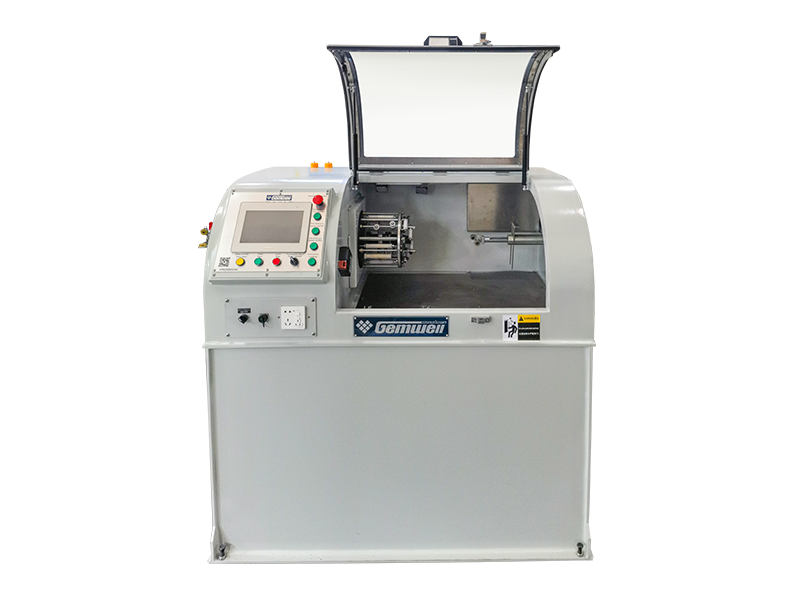
Another machine type that reduces maintenance burden is the lightweight one-piece cantilever single twisting machine with external lead pulley and power takeup. This design eliminates the need for a separate takeup pulley, which removes a large source of tension variation and simplifies maintenance.
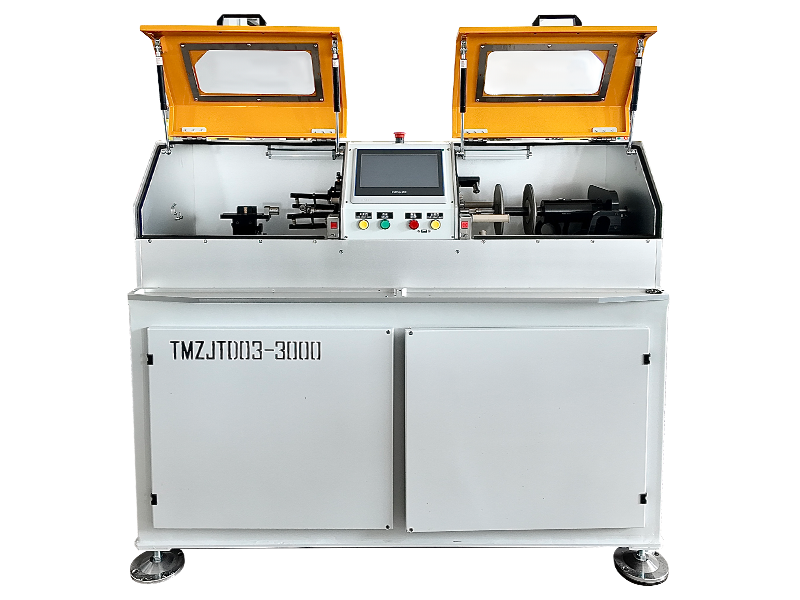
Light-Duty Integrated Cantilever Single Twisting Machine with External CapstanThis lightweight design integrates the cantilever and external capstan, simplifying maintenance and reducing tension variation. It is well-suited for general-purpose cable production requiring stable conductor geometry.View Product →Frequently Asked Questions
What cross section tolerance should a copper stranding machine hold?
For most general-purpose cable, the outer diameter tolerance should be ±0.05 mm when the conductor is measured at the same position along the reel. For very fine wires, such as 0.2 mm strands in high-flex cables, a tolerance of ±0.03 mm is more realistic and requires a machine with extremely stable tension.
Is a wire pair twisting machine the same as a strand bunching machine?
No. A wire pair twisting machine twists two already-formed conductors together into a pair. A strand bunching machine takes many individual wires and makes a single conductor. The two machines are on different stages of the cable manufacturing process.
Why does compaction change the outer diameter of a stranded conductor?
Compaction pushes the individual wires closer together and fills the gaps between them. This reduces the envelope diameter for the same copper cross section. For example, a 7-wire conductor with 1.5 mm² copper area may measure 1.68 mm in diameter before compaction and 1.55 mm after compaction.
What causes an oval instead of round cross section after stranding?
The most common cause is unequal tension on the individual wires. If the wire tension varies from one bobbin to the next, some wires will sit higher than others. The cable will then pass through the forming die in an off-center way, creating an oval shape. A second cause is a worn forming die with a non-round opening.
How often should forming dies be replaced on a stranding line?
There is no single answer, but a practical rule is to measure the die opening every 500 operating hours. If the opening has grown by more than 0.01 mm, replace the die. For a line running 24/7, that might mean every 4–8 weeks depending on the wire hardness and the speed.
Why does twist pitch differ between pairs inside the same multi-pair cable?
Different twist pitches are intentionally used to reduce crosstalk between pairs. In Ethernet cables, the four pairs often have four different lay lengths. The machine that produces these cables must be able to set each pair independently and keep the pitch stable throughout the length.
 Related Products