E-mail: info@gem-cablesolution.com
 Address: No.8 Yuefeng Rd, High Tech Zone, Dongtai, Jiangsu, China | No.109 Qilin East Rd, Daning, Humen, Dongguan, Guangdong, China.
 English
  English
 русский
 日本語
日本語 Español
 عربى
عربى 中文简体
中文简体



Content
- 1 What Is a Shielded Wire: The Direct Answer
- 2 How the Shielding Layer Is Constructed
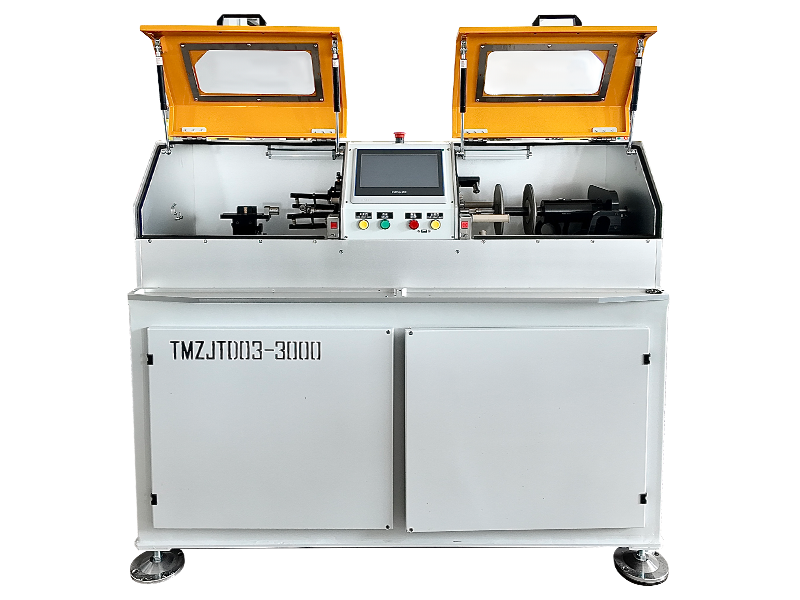
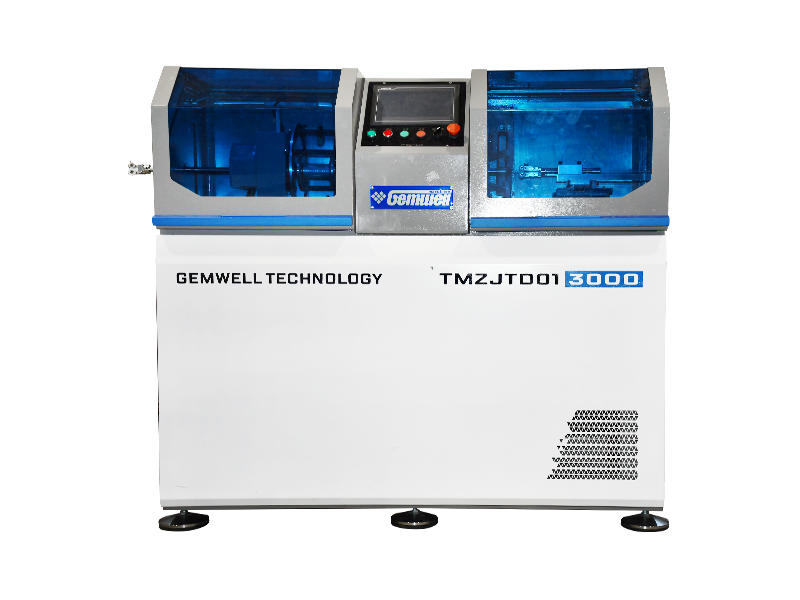
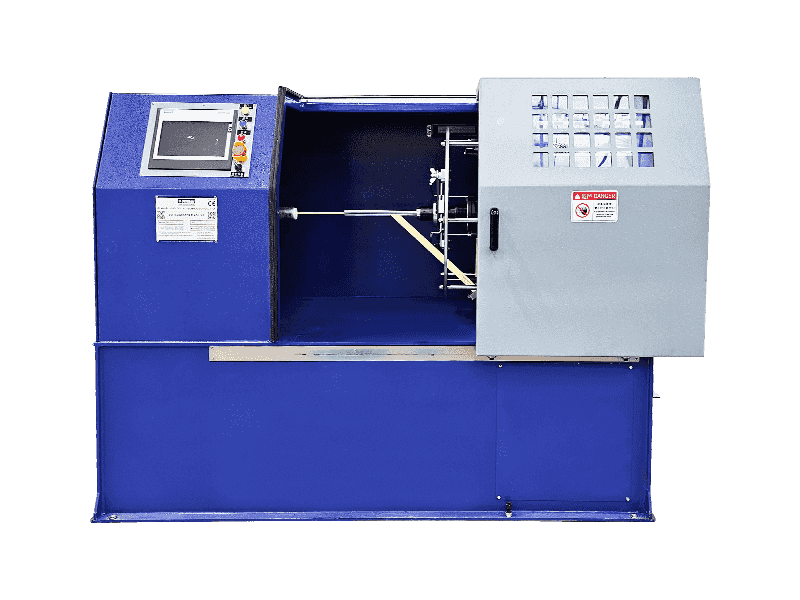
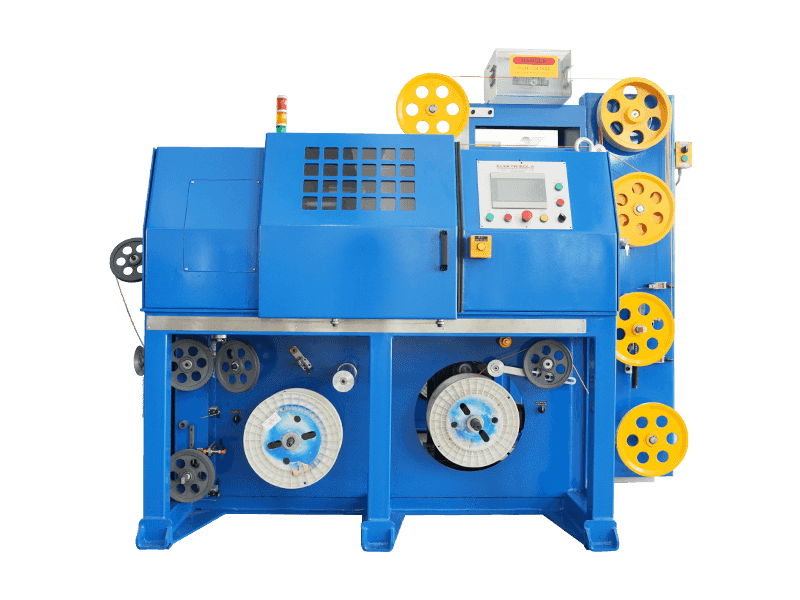
- 3 The Role of Wire and Cable Taping in Shielded Cable Assembly
- 4 Shielded vs. Unshielded Wire: When the Difference Actually Matters
- 5 Grounding Shielded Wire Correctly
- 6 How Wire and Cable Taping Affects Impedance and Signal Quality
- 7 Shielded Wire in Specific Industry Applications
- 8 How to Identify a Shielded Wire by Its Markings and Construction
- 9 Selecting the Right Shielded Wire for Your Application
What Is a Shielded Wire: The Direct Answer
A shielded wire is an electrical conductor — or group of conductors — wrapped in one or more layers of conductive material designed to block electromagnetic interference (EMI) and radio frequency interference (RFI). The shield acts as a Faraday cage around the signal-carrying conductors inside, redirecting unwanted electrical noise to ground rather than allowing it to distort the transmitted signal. In practical terms, this means the data, audio, video, or power signal traveling through the wire arrives at its destination cleaner and more accurately than it would through an unshielded alternative.
Shielded wires are the baseline requirement for any environment where signal integrity cannot be compromised — industrial automation floors, medical equipment, aerospace cabinets, broadcast studios, and high-speed data centers all rely on them daily. Without shielding, sensitive conductors absorb radiated energy from nearby motors, switching power supplies, fluorescent lighting, and even other cables running in parallel, which degrades performance and introduces error rates that compound at scale.
The shielding coverage is expressed as a percentage. A foil shield typically achieves 100% coverage, while a braided shield ranges from 85% to 98% depending on braid angle and strand density. For most industrial signal cables, engineers target at least 90% coverage to meet IEC 61000 and MIL-DTL-17 requirements without unnecessarily increasing cable diameter or cost.
How the Shielding Layer Is Constructed
The shield itself is not a single standardized layer. Manufacturers select shielding architecture based on the frequency range of expected interference, the flexibility requirements of the cable, and the installation environment. Understanding each construction type helps when specifying cable for a new project or evaluating an existing installation.
Foil Shields
A foil shield consists of a thin layer of aluminum or copper bonded to a polyester film carrier. The foil wraps around the conductor bundle with a defined overlap — typically 10% to 25% — to maintain electrical continuity. Foil shields deliver 100% surface coverage, making them highly effective against high-frequency EMI above 100 kHz. They are lightweight, add minimal diameter, and are cost-effective for multicore instrumentation and data cables. The tradeoff is that foil shields are relatively fragile and not suitable for cables that flex continuously in service.
Braided Shields
A braided shield is formed by interlacing fine strands of tinned copper, bare copper, or silver-plated copper wire in a woven pattern around the insulated conductor(s). Braid coverage depends on the number of carriers, picks per inch, and wire strand diameter. A braid optimized for low-frequency attenuation — say, below 10 MHz — might use a 36-carrier, 16-strand configuration at 95% coverage. Braided shields provide excellent mechanical strength, maintain coverage even when the cable is repeatedly flexed, and offer low transfer impedance, which is the key metric for shielding effectiveness at lower frequencies.
Spiral and Served Shields
A spiral (or serve) shield wraps strands helically around the cable core rather than interlacing them. This construction gives the cable maximum flexibility and the lowest bending radius of any shielded design, which is why spiral-shielded cables dominate in microphone leads, headset cables, and medical patient-monitoring leads that move constantly during use. The coverage is slightly lower than a braid at the same conductor count, and contact resistance increases at higher flex cycles, so spiral shields are not typically specified for RF or high-frequency data applications.
Combination Shields
For environments with interference across a wide frequency spectrum, combination shields layer foil and braid together. The foil seals every gap for high-frequency protection while the braid provides mechanical robustness and improves low-frequency shielding effectiveness. This architecture is standard in Cat 7 and Cat 8 network cables as well as high-end coaxial cables used in broadcast and RF transmission applications. Combination shields can achieve transfer impedance values below 5 milliohms per meter, which translates directly to measurable signal quality improvements in demanding installations.
The Role of Wire and Cable Taping in Shielded Cable Assembly
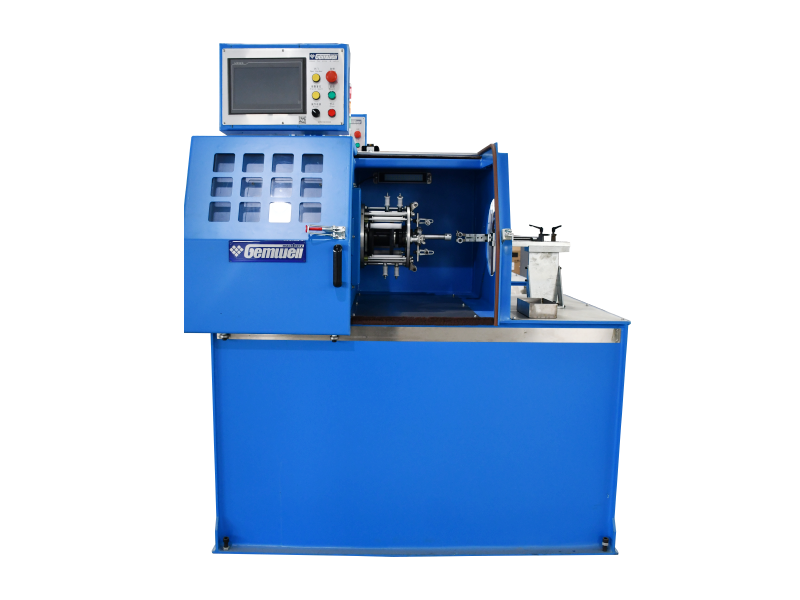
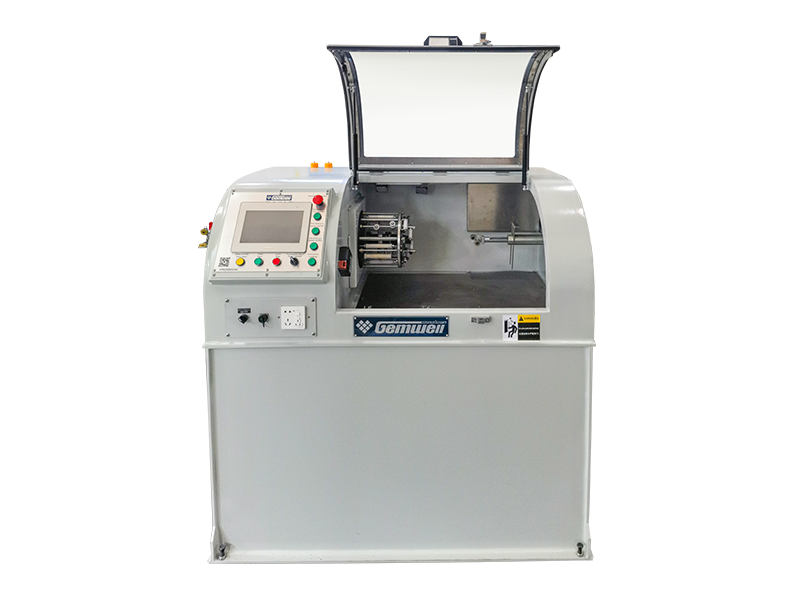
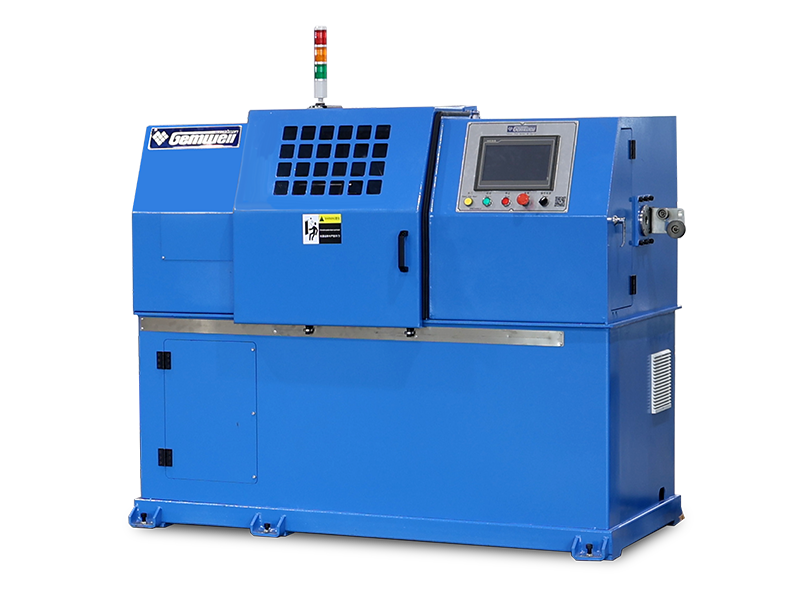
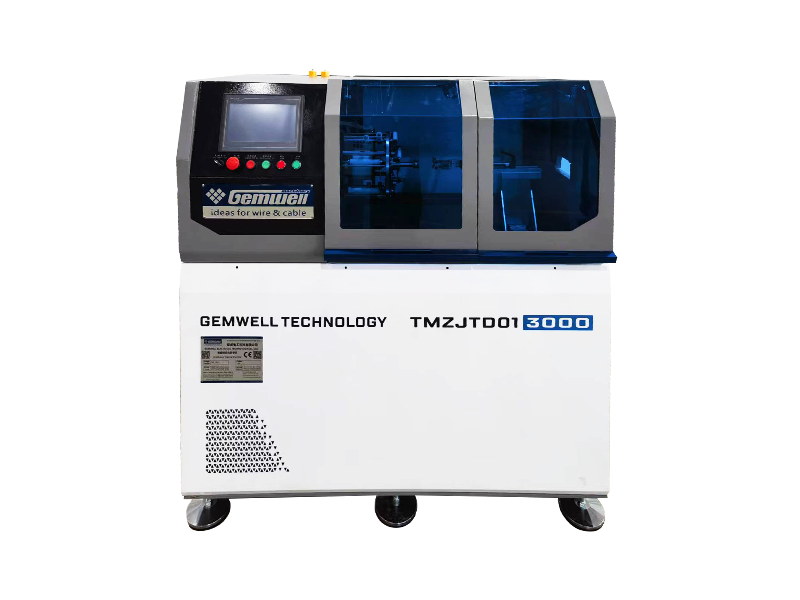
Before the conductive shield layer is applied, a critical intermediate step takes place: wire and cable taping. This process wraps specialized tape around the conductor bundle or individual insulated conductors to serve several structural and functional purposes that directly affect how well the finished shielded cable performs.
Wire and cable taping serves as a separator between the inner insulation and the outer shield. Without this separation, the foil or braid would press directly against the insulated conductors, creating mechanical abrasion during flexing and introducing capacitive coupling between the shield and the signal conductors. A consistent, smooth tape layer prevents both problems. The tape also maintains the roundness of the cable core so that the shield applies evenly across the entire circumference — an irregular core surface leads to uneven foil overlap and inconsistent braid coverage, both of which degrade shielding effectiveness.
In multicore shielded cables, individual pair or group shielding relies entirely on wire and cable taping for mechanical integrity. Each twisted pair in a screened twisted pair (STP) or foil twisted pair (FTP) design receives its own foil tape wrap before the overall shield is applied. This prevents crosstalk between pairs while still allowing the outer braid to function as a common-mode noise rejection layer for the entire cable. Without the inner taping step, the geometry of each pair would shift during the cabling process, destroying the impedance consistency that defines the cable's data-rate capability.
Types of Tape Used in Cable Manufacturing
Not all tape materials are interchangeable. Cable manufacturers select tape type based on the operating temperature, dielectric requirements, flexibility demands, and whether the tape itself needs to contribute to shielding.
| Tape Type | Primary Function | Typical Temperature Range | Common Application |
|---|---|---|---|
| Aluminum-Polyester Foil Tape | EMI shielding + separation | -40°C to +105°C | Individual pair screens in data cable |
| Polyester (PET) Film Tape | Core binding + roundness | -55°C to +125°C | Multicore cable assembly |
| PTFE (Teflon) Tape | High-temp insulation + separation | -65°C to +260°C | Aerospace and defense shielded cables |
| Mylar Tape | Moisture barrier + roundness | -40°C to +105°C | Industrial instrumentation cable |
| Copper Foil Tape | Enhanced conductivity + shielding | -40°C to +120°C | RF coaxial and low-impedance signal cables |
The overlap percentage during wire and cable taping is also a controlled variable. A 50% overlap is standard for polyester film tapes used as binding layers. For aluminum-polyester foil tapes performing a shielding function, a tighter overlap of 25% is common because the foil itself provides 100% coverage — the overlap only needs to ensure no gap opens when the cable flexes. Manufacturers define overlap tolerances in their process control documents, and deviations exceeding ±5% are flagged for rework in quality-controlled production environments.

Shielded vs. Unshielded Wire: When the Difference Actually Matters
The performance gap between shielded and unshielded wire is not theoretical — it shows up in measurable ways depending on the application. Understanding when shielding is essential versus when it is unnecessary helps avoid over-specifying cable (which adds cost and installation complexity) or under-specifying it (which causes real operational problems).
Unshielded twisted pair (UTP) cable — the standard for most office Ethernet installations — works perfectly well in environments where EMI sources are minimal and cable runs are kept below about 90 meters. The twist in the pair provides a moderate degree of common-mode noise rejection, which is sufficient for 10/100/1000Base-T Ethernet in a typical commercial building. The moment those cable runs enter an industrial environment with variable frequency drives, large motors, or dense conduit runs carrying power and signal cables together, UTP performance degrades measurably. Bit error rates climb, link speeds drop to lower autonegotiated rates, and packet retransmissions increase.
Shielded twisted pair (STP, FTP, or S/FTP depending on the architecture) resolves these problems by containing the signal within the shield and rejecting externally coupled noise before it reaches the conductors. The same 90-meter run that struggles with UTP in an industrial setting performs reliably at Gigabit speeds when properly shielded cable is used — provided the shield is correctly terminated to earth ground at both ends.
Environments That Require Shielded Wire
- Manufacturing and assembly lines with servo drives and variable frequency drives (VFDs) operating above 1 kHz switching frequencies
- Medical imaging equipment where even low-amplitude noise on sensor leads distorts diagnostic data
- Broadcasting and audio production where 60 Hz hum from power infrastructure degrades signal quality
- Instrumentation runs in chemical plants where cable trays mix thermocouple signal wiring with 480V power feeds
- Automotive electronics in high-voltage EV platforms where shielded HV cables are required to prevent interference with CAN bus and LIN bus communications
- Data centers running 25G and 100G copper connections where passive DAC cables rely on effective shielding to meet BER targets below 10^-12
Where Unshielded Wire Remains the Right Choice
- Standard office and residential Ethernet below 1 Gbps in clean electrical environments
- Internal wiring within well-designed shielded enclosures where the enclosure itself provides EMC protection
- Non-critical DC power distribution at low currents where conducted noise is acceptable
- Short signal runs under 1 meter in benign environments where coupling length is insufficient to pick up meaningful interference
Grounding Shielded Wire Correctly
A shielded wire that is not properly grounded provides little to no protection. The shield must have a low-impedance path to earth ground for collected interference energy to drain away. Incorrect grounding is one of the most common causes of EMC failures in systems that use shielded cable, and understanding the correct approach prevents expensive troubleshooting cycles after installation.
For most signal cable applications, the shield should be grounded at one end only — typically the source end. This single-point grounding approach prevents shield currents from flowing along the length of the cable, which would induce a voltage on the shield and defeat its purpose. When the shield is grounded at both ends of a long cable run, any difference in ground potential between the two endpoints — a common occurrence in industrial facilities where ground buses at different panels may differ by 1–5 V — drives a current through the shield that induces noise directly onto the signal conductors.
The exception is high-frequency applications above roughly 1 MHz. At these frequencies, the single-point ground creates a quarter-wave resonance along the shield that can actually worsen high-frequency noise pickup. RF and high-speed data cable shields are grounded at both ends and at multiple intermediate points to ensure the shield stays at a consistent potential across its length. Coaxial cable for RF use always carries a double-grounded shield for this reason.
Common Grounding Mistakes to Avoid
- Leaving the shield unconnected (floating) at one or both ends — this turns the shield into an antenna rather than a barrier
- Grounding through a long pigtail lead — even a 50 mm pigtail wire introduces measurable inductance that limits shield effectiveness above a few hundred kHz
- Using a dedicated shield ground that is not bonded back to the main system ground — isolated grounds at different potentials cause the same problem as no ground at all
- Discontinuous shield connections through connectors — every connector along a shielded cable run must provide 360-degree shield termination, not a small pigtail contact
- Mixing single-point and multipoint grounding on the same cable run without a clear design rationale — this produces unpredictable resonance behavior

How Wire and Cable Taping Affects Impedance and Signal Quality
The taping step in cable manufacturing is not purely mechanical — it has a direct electrical effect on the finished cable's impedance characteristics. Impedance determines how well a cable transmits high-speed signals without reflections that corrupt data, and the dielectric constant of the tape material is one of the variables that determines impedance alongside conductor diameter and spacing.
For a 50-ohm coaxial cable, the dielectric constant of all insulating materials between the center conductor and the shield — including any tape layers — must be factored into the geometry calculation. Polyester film tape has a dielectric constant of approximately 3.2–3.4. PTFE tape is approximately 2.1. A cable designer who switches tape material without recalculating the conductor diameter or spacing will produce a cable that does not meet its target impedance, leading to return loss failures on the finished cable.
In twisted pair data cables, the wire and cable taping step determines the effective dielectric surrounding each pair, which directly controls the pair's characteristic impedance and propagation velocity. Category 6A cable, for example, requires individual pair impedance control within ±2 ohms across the full 500 MHz frequency range. Achieving that tolerance requires precise control over tape type, thickness, tension, and overlap percentage during the taping step. A 10% variation in tape thickness can shift pair impedance by as much as 1 ohm at high frequencies, which is within but close to the tolerance budget.
Propagation velocity — expressed as a percentage of the speed of light, abbreviated NVP — is also affected by the tape dielectric. A cable with polyester tape has a lower NVP than the same design with PTFE tape because the higher dielectric constant slows signal propagation. For time-domain reflectometry (TDR) testing and time-delay compensation in structured cabling systems, the installer needs the cable manufacturer's published NVP value, which accounts for the specific tape used in production.
Shielded Wire in Specific Industry Applications
Each industry that relies on shielded wire faces a distinct set of environmental challenges, signal types, and installation constraints. The way shielded wire is specified and installed varies accordingly, and understanding these differences makes it easier to select the right cable for a new design or troubleshoot an existing installation.
Industrial Automation and Process Control
PROFIBUS, PROFINET, DeviceNet, and Modbus TCP fieldbus networks all specify shielded cable in their respective physical layer standards. A PROFIBUS installation, for example, calls for a single twisted shielded pair with a characteristic impedance of 135–165 ohms at 3–20 MHz. The shield must be grounded at every control panel and field device junction box through a low-impedance connection, typically achieved with a cable gland that provides 360-degree shield termination. In a typical automotive body shop with 150–200 welding robots, improperly shielded fieldbus cable is the single most common cause of communication faults that shut down production lines.
Medical and Healthcare Equipment
ECG leads, EEG electrode cables, and ultrasound transducer connections all require shielded wire, but medical cable design adds requirements beyond basic EMI rejection. The cable must not introduce significant capacitance between patient and ground (for patient safety isolation), must remain flexible after hundreds of coiling cycles, and must withstand repeated disinfection with aggressive chemical agents. Many medical signal cables use tri-axial construction — a center conductor, an inner shield, and an outer shield — where the inner shield is actively driven to the same potential as the center conductor to eliminate capacitive signal loading. This technique, called driven or active shielding, allows the cable to have very low effective capacitance even over lengths of 2–3 meters.
Aerospace and Defense
MIL-DTL-27500 and MIL-DTL-17 govern shielded wire used in aerospace platforms. These standards mandate PTFE tape in the cable assembly's taping steps because PTFE's temperature rating of -65°C to +260°C covers the full range of airborne environments. The shielding requirements for avionics wiring also address lightning indirect effects — a high-altitude aircraft can experience a 200 kA lightning strike that couples into wiring harnesses throughout the airframe. Shielded wire in avionics bundles must transfer less than 1% of coupled energy to the inner conductor, which sets a very low transfer impedance target. Wire and cable taping in these assemblies is done under strict process control with 100% coverage verification before the shield is applied.
Audio and Broadcast
Professional balanced audio cable uses a pair of conductors surrounded by a spiral or braided shield. The balanced differential signal rejects common-mode noise that appears equally on both conductors — including 60 Hz hum from lighting infrastructure, HVAC systems, and power wiring running in parallel. The shield provides an additional barrier for sources of noise that would otherwise appear as a common-mode signal. In broadcast studios where hundreds of audio feeds run in parallel over long distances, the combination of balanced wiring and shielding is what allows clean signal transmission without amplifying ground loops. Standard microphone cable, for example, maintains signal integrity over runs exceeding 50 meters at noise floors below -90 dBu.
How to Identify a Shielded Wire by Its Markings and Construction
When inspecting a cable, several visual and print indicators confirm whether it is shielded and describe the type of shield used. Understanding these markings saves time when sourcing replacement cable or verifying that an installed cable meets specifications.
Cable jacket printing typically includes a designation code that identifies the shield type. Common designations follow IEC 60228 and UL naming conventions:
- F/UTP — Overall foil shield, unshielded twisted pairs inside. Common in Cat 5e and Cat 6 shielded installations.
- U/FTP — No overall shield, individual foil-shielded twisted pairs. Used in Cat 6A and Cat 7 to reduce crosstalk between pairs.
- S/FTP — Braided overall shield plus individual foil-shielded pairs. Highest performance for Cat 7 and Cat 8 applications.
- SY, CY, YCY — European designation codes for screened power and control cables with steel wire armoring and/or copper braid shields.
- RG (Radio Guide) — Designates coaxial cable. The specific RG number (RG-58, RG-6, RG-213) implies the shield type and construction defined in the original MIL-C-17 specification.
Physically cutting into a cable cross-section reveals the shield layer directly. A foil shield appears as a bright, reflective metallic layer beneath the outer jacket, typically with a drain wire running alongside it. A braided shield shows a visible woven wire pattern. If both are present, the cable uses a combination shield. The wire and cable taping layer, if present, appears as a smooth film wrap immediately inside the shield layer — often translucent or off-white for polyester tape, or silver-colored for foil tape wrapping individual pairs.
Selecting the Right Shielded Wire for Your Application
Specifying shielded wire correctly involves more than choosing the highest shielding coverage available. Over-specifying increases cable cost, diameter, weight, and installation time. Under-specifying leaves the system vulnerable to interference. A structured selection process accounts for the actual interference environment, signal type, frequency range, mechanical requirements, and installation constraints.
Start by characterizing the interference sources in the environment. A variable frequency drive switching at 8 kHz generates harmonics up to several hundred kHz, which calls for a foil or braid shield with low transfer impedance in that frequency range. A nearby radio transmitter or radar installation generates interference above 30 MHz, where foil coverage is more critical than braid angle. If both types of interference are present, a combination shield is the correct starting point.
The cable's flex life requirement is often the deciding factor between foil and braid. Foil shields crack and develop gaps after relatively few flex cycles — typically fewer than 10,000 in dynamic applications. Braided shields can sustain hundreds of thousands of flex cycles before coverage degrades meaningfully. Spiral shields can sustain millions of flex cycles but with reduced high-frequency shielding effectiveness. Matching the shield type to the expected flex cycles in service prevents premature cable failure that would otherwise appear as intermittent shielding degradation and unpredictable signal quality issues.
Temperature rating must encompass both the operating environment and any short-term excursions. A cable rated for 75°C operating temperature is not suitable for installation near a heat source that peaks at 90°C during production cycles, even if 90°C is reached only briefly. The tape material used in the wire and cable taping step is often the limiting component for temperature rating — polyester tape handles up to 125°C, while PTFE tape extends the range to 260°C for high-temperature applications.
Finally, confirm the termination method before finalizing a cable selection. A braided shield requires a backshell or cable gland that provides circumferential shield contact — not a pigtail. A foil shield with a drain wire requires a connector that accommodates the drain wire pin assignment. Installing a cable with the wrong termination approach renders the shielding largely ineffective regardless of how well the cable itself is specified.
 Related Products