E-mail: info@gem-cablesolution.com
 Address: No.8 Yuefeng Rd, High Tech Zone, Dongtai, Jiangsu, China | No.109 Qilin East Rd, Daning, Humen, Dongguan, Guangdong, China.
 English
  English
 русский
 日本語
日本語 Español
 عربى
عربى 中文简体
中文简体



Content
- 1 Compact Extrusion Wire Machine: The Direct Answer
- 2 How a Compact Extrusion Wire Machine Is Built
- 3 Screw Design and Why It Decides Output Quality
- 4 Cooling Trough Configurations for Tight Spaces
- 5 Control Systems: What Separates Basic From Reliable
- 6 Material Compatibility Across Common Applications
- 7 Sizing a Machine to Your Actual Production Volume
- 8 Maintenance Patterns That Extend Service Life
- 9 Frequently Asked Questions
- 9.1 What wire diameter range can a compact extrusion wire machine handle?
- 9.2 How much floor space does a compact cable extrusion machine actually need?
- 9.3 Can one operator run a compact extrusion wire machine alone?
- 9.4 What is the typical motor power range for these machines?
- 9.5 Does a compact machine sacrifice output speed compared to a standard line?
- 9.6 How long does a typical material or color changeover take?
Compact Extrusion Wire Machine: The Direct Answer
A compact extrusion wire machine is a space-saving cable extrusion machine built to apply insulation or jacketing layers onto wire and cable conductors without the floor footprint of a traditional production line. Most compact units fit within 8 to 15 square meters while still delivering output speeds between 80 and 400 meters per minute, depending on conductor diameter and material. For workshops with limited floor space, low-to-mid volume runs, or frequent material changeovers, a compact extrusion wire machine is the practical answer because it shortens setup time, reduces material waste during startup, and lets one operator manage the entire line rather than needing a multi-person crew.
The rest of this guide breaks down how these machines are structured, what separates a reliable compact cable extrusion machine from an underpowered one, and how to match machine specifications to your actual production needs.
How a Compact Extrusion Wire Machine Is Built
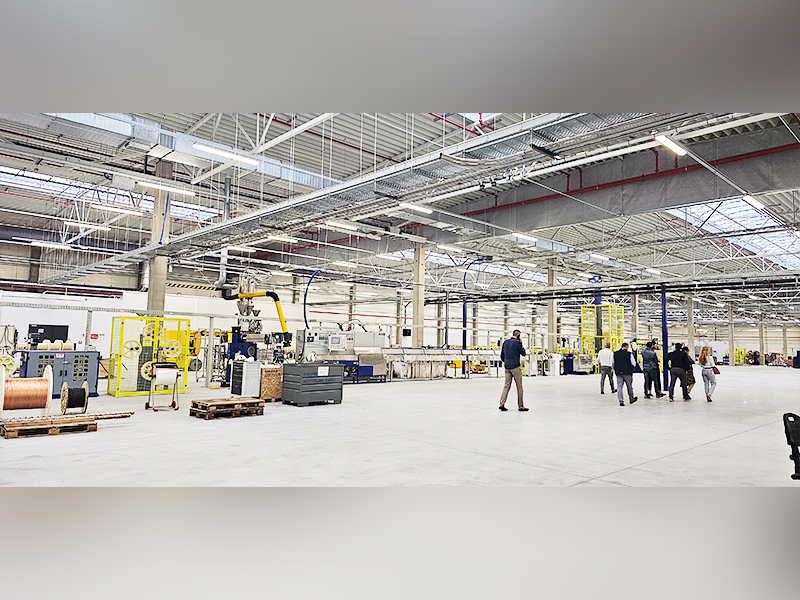
Every compact extrusion wire machine shares the same core sequence as larger cable extrusion machine lines, just condensed into a tighter mechanical layout. The conductor pays off from a reel stand, passes through a preheater, enters the extruder crosshead where molten polymer is applied, then moves through cooling, a spark tester or diameter gauge, and finally a take-up reel.
What makes a unit "compact" is not a reduction in functional steps but a redesign of how those steps connect. Compact machines typically integrate the preheater and extruder base into a shared frame, use a vertical or stacked cooling trough instead of a long horizontal one, and combine the haul-off and take-up into a single drive cabinet. This cuts the line length by roughly 40 to 60 percent compared to a standard configuration handling the same wire gauge range.
| Line Type | Length | Operators Needed | Wire Range |
|---|---|---|---|
| Compact extrusion wire machine | 3 to 6 meters | 1 | 0.1mm to 6mm |
| Standard cable extrusion machine | 10 to 18 meters | 2 to 3 | 0.1mm to 25mm |
Screw Design and Why It Decides Output Quality
The extruder screw is the single component that determines whether a compact extrusion wire machine produces consistent wall thickness or develops eccentricity problems at speed. Compact machines generally use a single-screw extruder with an L/D ratio between 20:1 and 25:1, shorter than the 25:1 to 30:1 ratio found on full-size lines, because the shorter barrel matches the smaller motor housing without sacrificing melt uniformity for wire gauges under 6mm.
Three Zones That Matter
- Feed zone: pulls solid pellets forward and begins compaction
- Compression zone: gradually melts material while reducing channel depth
- Metering zone: stabilizes pressure and delivers consistent melt flow to the crosshead
A poorly matched screw design causes surging, which shows up as a wire diameter that fluctuates by more than 0.02mm along the same spool. Buyers comparing machines should ask for a sample reel cut and measured at three points to confirm consistency before committing to a purchase.
Cooling Trough Configurations for Tight Spaces
Cooling is where compact extrusion wire machine design diverges most visibly from conventional layouts. Because horizontal troughs need length to dissipate heat gradually, compact units instead rely on one of three approaches:
- Multi-zone short trough with separated hot and cold water sections to accelerate the temperature drop within a shorter distance
- Spray cooling tunnels that use nozzle arrays instead of a submersion bath, cutting required length by up to 50 percent
- Vertical drop cooling, where the wire travels downward through a stacked chamber rather than horizontally
For PVC and PE insulated wire under 4mm, a spray cooling tunnel of 2 to 3 meters can achieve the same cooling effect as a 5-meter submersion trough, according to typical line-speed benchmarks used by cable machinery integrators. This is the main reason compact cable extrusion machine units can match output speeds close to standard lines despite the smaller frame.
Control Systems: What Separates Basic From Reliable
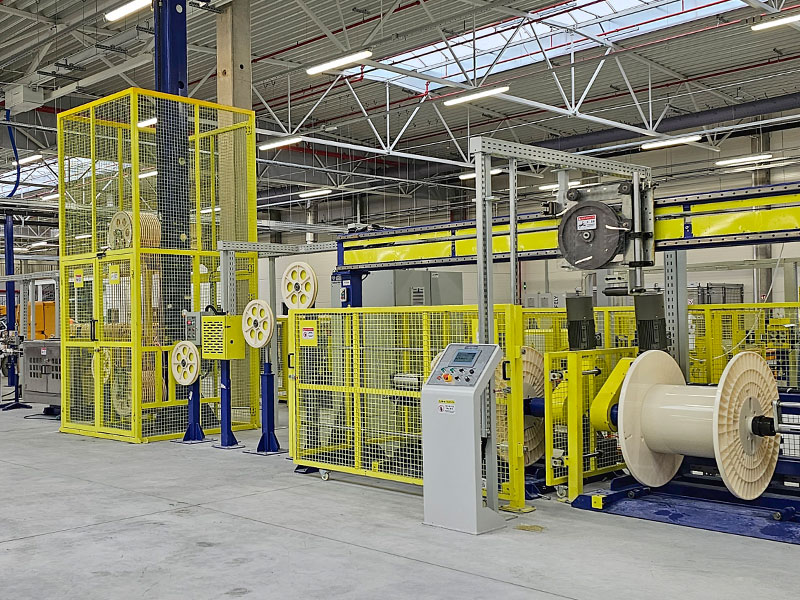
Control architecture is often the most overlooked factor when evaluating a compact extrusion wire machine. A basic unit runs on relay logic with manual dial adjustments for temperature and line speed. A reliable unit runs on a PLC with touchscreen HMI, allowing operators to store recipes for different wire gauges and recall them instantly during changeovers.
| Tier | Adjustment Method | Recipe Storage | Changeover Time |
|---|---|---|---|
| Basic relay logic | Manual dials | None | 25 to 40 minutes |
| Mid-tier PLC | Digital touchscreen | Up to 10 recipes | 8 to 12 minutes |
| Advanced PLC with closed-loop diameter control | Automated correction | Unlimited, networked | Under 5 minutes |
Closed-loop diameter control deserves special attention. This system uses a laser gauge positioned after the cooling stage to measure wire diameter in real time and automatically adjusts haul-off speed or extruder RPM to correct drift before it becomes scrap. Lines without this feature typically run scrap rates between 3 and 6 percent, while lines with closed-loop control bring that down to under 1 percent in most reported cases from cable manufacturing facilities.
Material Compatibility Across Common Applications
A compact extrusion wire machine is not a one-material tool. The same crosshead and screw configuration that works perfectly for PVC will underperform on materials with different melt characteristics. Matching material to machine setup is essential before production planning begins.
PVC Insulation
PVC remains the most common material run on compact lines because its processing temperature window, generally 160°C to 190°C, is forgiving and tolerates minor screw speed variation without major defects. It is the default starting point for general building wire and low-voltage applications.
Polyethylene and Cross-Linked Polyethylene
PE and XLPE need tighter temperature control, typically within a 5°C band, because these materials are more sensitive to shear heating. A compact extrusion wire machine running XLPE should have a dedicated cooling zone separate from the main trough to manage the crosslinking process if the line includes that stage.
TPE and Low-Smoke Compounds
Thermoplastic elastomers and low-smoke zero-halogen compounds used in transportation and marine cable require lower shear screw profiles to avoid degrading flame-retardant additives. Running these compounds on a screw designed for standard PVC often causes visible streaking or discoloration in the finished jacket.
Sizing a Machine to Your Actual Production Volume
Overbuying capacity is one of the most common mistakes when selecting a compact extrusion wire machine. Matching machine throughput to realistic daily output prevents both wasted capital and underpowered bottlenecks.
As a planning reference: a small workshop producing 1,000 to 3,000 meters per day of thin-gauge wire (under 2mm) is well served by a 65mm or 75mm single-screw compact unit. A facility targeting 5,000 to 10,000 meters per day in the 2mm to 6mm range typically needs a 90mm to 100mm screw diameter with a stronger drive motor, usually in the 30kW to 45kW range, to sustain that throughput without overheating the melt.
Line speed alone is a misleading number without context. A machine advertised at 300 meters per minute on a 0.5mm wire will not run anywhere close to that speed on a 4mm conductor, because larger diameters require thicker insulation walls and therefore slower haul-off to maintain proper cooling. Always request speed figures tied to a specific wire gauge and wall thickness, not a single blanket number.
Maintenance Patterns That Extend Service Life
Compact machines run hotter relative to their frame size because components sit closer together, which means heat management and routine maintenance carry more weight than on spaced-out standard lines.
- Clean the screen pack and breaker plate every material changeover to prevent pressure buildup that strains the drive motor
- Inspect the crosshead die and tip alignment weekly, since compact frames have less tolerance for thermal expansion drift
- Check cooling water flow rate monthly, as scale buildup in a shorter trough has a proportionally larger impact on cooling efficiency
- Replace haul-off belts or caterpillar tracks based on wear, not a fixed calendar schedule, because wear rate depends heavily on wire surface friction
Facilities that follow a documented changeover cleaning routine report fewer unplanned stoppages than those relying on reactive maintenance, based on common patterns observed across small-to-mid scale wire production operations.
Frequently Asked Questions
What wire diameter range can a compact extrusion wire machine handle?
Most compact units cover 0.1mm to 6mm conductor diameter, which fits the large majority of building wire, automotive wire, and low-voltage control cable applications. Larger diameter ranges generally require a standard, non-compact line.
How much floor space does a compact cable extrusion machine actually need?
A typical compact line, including the payoff stand, extruder, cooling section, and take-up, needs approximately 8 to 15 square meters of floor area, compared to 25 to 40 square meters for a standard configuration covering the same gauge range.
Can one operator run a compact extrusion wire machine alone?
Yes. The integrated control cabinet and shortened line length are specifically designed so a single trained operator can monitor payoff, extrusion parameters, and take-up without needing a second person stationed at a separate control point.
What is the typical motor power range for these machines?
Smaller 65mm screw units typically use 15kW to 22kW main drive motors, while 90mm to 100mm screw units used for thicker wire commonly require 30kW to 45kW to maintain stable output under load.
Does a compact machine sacrifice output speed compared to a standard line?
Not significantly for thinner gauges. With spray cooling or multi-zone troughs, compact lines running wire under 4mm can reach 80 to 400 meters per minute, comparable to standard lines in the same gauge range, though larger diameters above 10mm still favor longer standard cooling sections.
How long does a typical material or color changeover take?
With a mid-tier PLC and stored recipes, changeover generally takes 8 to 12 minutes. Machines with advanced closed-loop control and networked recipe storage can bring this under 5 minutes.
 Related Products